
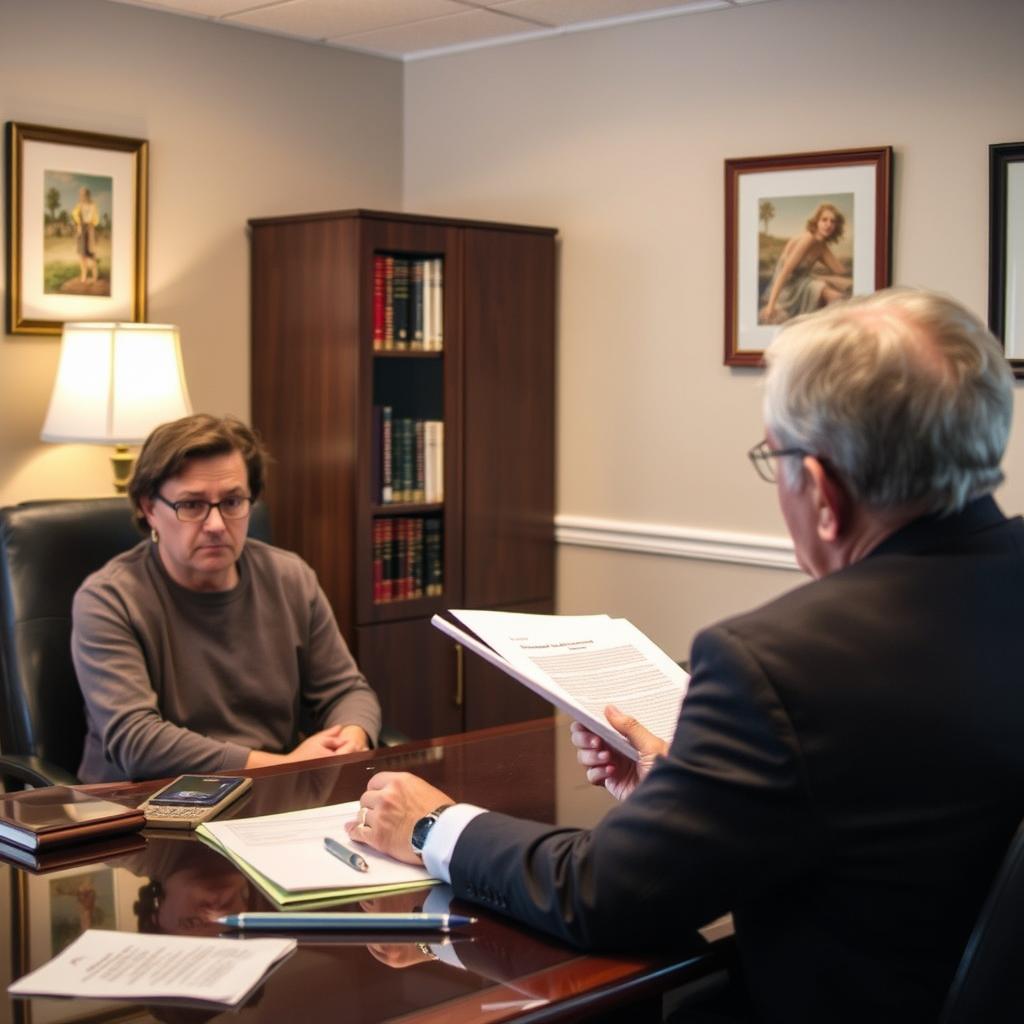
Trial Separation Lawyer James City County, VA
When a marriage reaches a crossroads, many couples consider a period of living apart to decide whether to reconcile or proceed toward divorce. A trial separation can provide the space you need while also carrying legal implications that affect property rights, custody arrangements, and eventual divorce proceedings. In James City County and throughout the Williamsburg area, Mr. Sris and his Of Counsel team at Law Offices Of SRIS, P.C. help clients navigate trial separation thoughtfully—drafting separation agreements, protecting assets, and positioning families for whatever comes next. If you are considering a trial separation, contact Law Offices Of SRIS, P.C. at (888) 437-7747 to request a consultation. Law Offices Of SRIS, P.C. – Advocacy Without Borders.
What Is a Trial Separation in Virginia?
A trial separation is not a distinct legal status, but it sets the stage for the no‑fault divorce ground upon which many Virginia divorces proceed. Under Va. Code § 20‑91(9), a court may grant a divorce after the parties have lived separate and apart without cohabitation. The required separation period is one year, or six months if there are no minor children of the marriage and the parties have entered into a written separation agreement. Whether spouses remain in the same home or relocate, the separation must be continuous and the intent to end the marriage must be established. Because seemingly small actions—such as intermittent contact or shared finances—can affect how the court views the separation, guidance from a knowledgeable family law attorney is important from the start.
The Role of a Separation Agreement
A written separation agreement, also called a property settlement agreement, is often the cornerstone of a trial separation. This contract can resolve all outstanding issues between the spouses: division of marital property and debts, spousal support, child custody and visitation, and child support. In James City County, a properly crafted agreement can streamline the eventual divorce and may even allow the parties to proceed on the faster six‑month separation track. The agreement must be in writing and signed by both parties. Mr. Sris and his Of Counsel draft separation agreements that reflect each client’s priorities while remaining enforceable under Virginia law, including the equitable distribution factors of Va. Code § 20‑107.3 and the child custody best‑interest factors of Va. Code § 20‑124.3.
Trial Separation and Divorce in James City County
Family law matters involving a trial separation and ultimate divorce are handled in the James City County Circuit Court at 5201 Monticello Ave, Suite 4, Williamsburg, VA 23188. This court has exclusive original jurisdiction over divorce and equitable distribution. Standing‑alone custody, visitation, child support, and protective order matters are heard in the James City County Juvenile and Domestic Relations District Court. Because the Circuit Court and the J&DR Court operate on different calendars and procedural rules, coordinating separation‑related filings across both courts requires careful planning. Our Richmond Location represents clients throughout James City County—including Williamsburg, Norge, Toano, and Lightfoot—and is familiar with local practice in the Ninth Judicial District. For scheduling or directions, call (888) 437-7747.
How Mr. Sris and His Of Counsel Handle Trial Separation Matters
Every trial separation raises unique concerns: whether to move out of the marital home, how to structure temporary child custody and support while living apart, and how to preserve assets and records for a potential divorce. Mr. Sris and his Of Counsel team begin by understanding your goals—whether reconciliation is still possible or you are preparing for a divorce. They work to negotiate a written separation agreement that addresses temporary and permanent arrangements, or, when negotiation is not possible, they prepare to litigate contested issues before the James City County courts. The team draws on extensive combined legal experience in Virginia family law to protect your interests at every stage, from the initial separation through the final divorce decree.
About Mr. Sris and His Of Counsel
Mr. Sris is the Owner and Founder of Law Offices Of SRIS, P.C. A former prosecutor, he has practiced since 1997 and is admitted in Virginia, Maryland, the District of Columbia, New Jersey, and New York. He testified before the Virginia House Courts of Justice Committee in support of 2019 HB 635 (chief patron Del. David Bulova). His legal background includes extensive experience in family law, equitable distribution, and related litigation. Alongside Mr. Sris, the firm’s Of Counsel attorneys bring significant courtroom and negotiation experience in family law, child custody, and domestic relations. Together, they offer clients in James City County a multi‑faceted perspective on trial separation and divorce strategy.
Frequently Asked Questions
What does a trial separation lawyer do?
A trial separation lawyer advises you on the legal implications of living apart, drafts separation agreements, and positions you for a potential divorce. The attorney helps you understand how your actions during the separation period—such as new living arrangements, shared bill payments, or parenting schedules—may be viewed by a court if the separation leads to divorce. The lawyer also negotiates the terms of a separation agreement, addressing property division, spousal support, custody, and child support in accordance with Virginia law, and represents you in any court proceeding that follows.
Do I need a lawyer for a trial separation in James City County?
You are not legally required to hire a lawyer to separate, but having a lawyer is strongly recommended. A trial separation creates legal consequences; an informal arrangement may later be construed as a binding agreement or may fail to protect your rights regarding marital assets and parenting time. A family law attorney ensures your separation agreement is enforceable and that your interests are preserved whether you reconcile or divorce. In James City County, Mr. Sris and his Of Counsel can help you navigate the process and avoid pitfalls that could complicate a later divorce.
Is Virginia a community property state when a couple separates?
No, Virginia is an equitable distribution state. During marriage and at divorce, marital property is divided fairly—but not necessarily equally—based on the 11 factors in Va. Code § 20‑107.3. Property that either spouse acquires after the separation date remains the separate property of the acquiring spouse, as long as it is not acquired with marital funds. A separation agreement can define which assets are marital and which are separate, providing clarity during the trial separation period.
How long must we be separated before filing for divorce in James City County?
Virginia requires a separation period of one year, or six months if you have no minor children from the marriage and have a signed separation agreement (Va. Code § 20‑91(9)). The separation must be continuous, without cohabitation. If you have minor children, the separation must last one year, even with an agreement, unless you proceed on a fault‑based ground. The mandatory period runs from the date the separation begins, and the divorce complaint can be filed in the James City County Circuit Court after that time has passed.
Can a separation agreement be modified once signed?
Yes, a separation agreement can be modified if both parties agree in writing. If the spouses later wish to change custody, visitation, or support terms before a divorce decree is entered, they can amend the agreement. After a divorce decree has incorporated the agreement, modifications typically require a showing of a material change in circumstances—especially for custody and support provisions—under Virginia law. Mr. Sris and his Of Counsel can help you pursue modifications when circumstances change.
What should I bring to a consultation about a trial separation?
Gather recent financial documents, a list of marital assets and debts, and any existing custody or support orders. Bring pay stubs, tax returns, bank and investment account statements, deeds, vehicle titles, and credit card or mortgage statements. If you have children, documentation of their schedules and any existing parenting plan is helpful. The more information you provide, the better your attorney can assess your situation and outline options.
How are child custody and support handled during a trial separation?
Temporary custody and support arrangements can be formalized through a separation agreement or by a court order from the James City County J&DR Court. While the separation is ongoing, either spouse may seek pendente lite relief—a temporary court order establishing custody, visitation, and child support pending the divorce. Child support is calculated using Virginia’s statutory guidelines (Va. Code § 20‑108.1), which consider both parents’ gross incomes and other factors. A local attorney can help you secure an order that protects the child’s best interests during the separation.
If we reconcile, does the separation agreement remain in effect?
Typically, the separation agreement becomes void if the parties resume marital cohabitation with the intent to reconcile. However, the specific language of the agreement controls. Some agreements explicitly state that certain provisions—such as property division—survive reconciliation, while others terminate in their entirety. It is crucial to have the agreement drafted by an experienced lawyer who can anticipate these possibilities and craft language that protects your long‑term interests.
Will the separation affect the division of retirement accounts?
Yes, contributions made to retirement accounts after the date of separation are generally considered separate property and not subject to equitable distribution. Under Va. Code § 20‑107.3, the court classifies property as marital or separate based on when and how it was acquired. Retirement plan contributions and earnings that accrue after the separation date remain the sole property of the contributing spouse. A Qualified Domestic Relations Order (QDRO) may be necessary to divide marital portions of certain retirement plans. Mr. Sris testified on the very statute that governs QDROs, and his team is well‑versed in handling these complex assets.
What if my spouse refuses to sign a separation agreement?
If a spouse will not sign, you cannot force an agreement, but you may still proceed with the separation and eventually file for divorce on fault or no‑fault grounds. A contested divorce will require a trial in the James City County Circuit Court to resolve all disputed issues—division of property, spousal support, custody, and child support. Even without an agreement, beginning the separation period and documenting your living arrangement sets the timeline for a no‑fault divorce. Mr. Sris and his Of Counsel are prepared to litigate when settlement proves impossible.
Related Local Family Law Pages:
York County Family Law Lawyer •
Williamsburg Family Law Lawyer •
Fairfax County Family Law Lawyer
Attorney advertising. Prior results do not guarantee a similar outcome. Results may vary. Case results depend on a variety of factors unique to each case. The firm’s lawyers are admitted in VA, MD, DC, NJ, and NY. Mr. Sris and his Of Counsel team are engaged through Excella. Nothing on this page creates an attorney‑client relationship; a signed engagement agreement is required.