
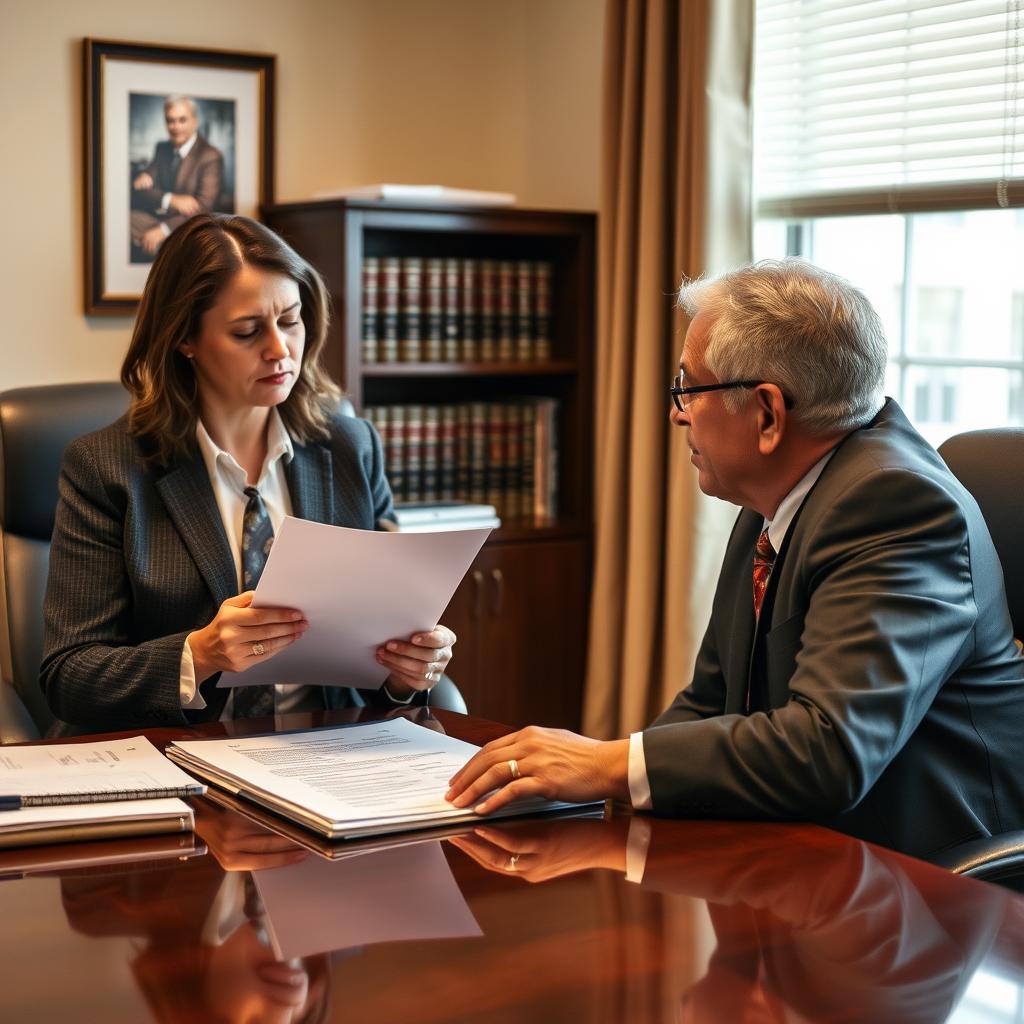
Fault Based Divorce Lawyer Poquoson, VA
A fault-based divorce in Poquoson, Virginia, allows one spouse to end the marriage by proving the other spouse committed specific marital misconduct, such as adultery, cruelty, or desertion. Unlike a no-fault divorce—which requires a separation period of either one year or six months with a signed agreement—a fault ground eliminates the waiting period and can directly affect spousal support, property division, and custody. Mr. Sris, a former prosecutor and the Owner and Founder of Law Offices Of SRIS, P.C., works with his Of Counsel to represent clients in fault-based divorce proceedings in the Poquoson Circuit Court. For guidance on filing a fault divorce in Poquoson, reach Law Offices Of SRIS, P.C. at (888) 437-7747.
What Fault Based Divorce Means in Poquoson, Virginia
Poquoson, an independent city bordered by the Chesapeake Bay and York County, falls within the Eighth Judicial District of Virginia. All divorce matters—including fault-based divorce—are heard in the Poquoson Circuit Court, located at 500 City Hall Avenue, Poquoson, Virginia 23662. Matters involving custody, support, or protective orders during a divorce may also proceed in the Poquoson Juvenile and Domestic Relations District Court, while the divorce and property division cases remain exclusively before the Circuit Court. Attorneys appearing in these courts must be familiar with local procedures, the expectations of the bench, and how Virginia’s equitable distribution framework interacts with fault grounds.
Under Virginia law, a fault-based divorce requires the filing spouse to present evidence of the other spouse’s marital fault. The grounds for a fault divorce in Virginia are codified at Va. Code § 20-91 and include adultery, cruelty that causes a reasonable apprehension of bodily harm, willful desertion or abandonment for one year, and a felony conviction resulting in confinement for more than one year. Unlike no-fault divorces, which involve a mandatory separation period, a fault-based divorce can proceed immediately once the ground is established, which often becomes a central strategic consideration for clients who wish to end the marriage quickly or whose financial and custodial interests are directly impacted by the fault of the other spouse. Because Virginia is an equitable distribution state, marital property is divided fairly—but not necessarily equally—and the court may weigh fault as a factor in its distribution under Va. Code § 20-107.3. Mr. Sris, who testified before the Virginia House Courts of Justice Committee in support of 2019 HB 635 (chief patron Del. David Bulova), which revised subsection (g) of that statute, brings a detailed understanding of how fault intersects with property division in local courts.
How Mr. Sris and His Of Counsel Handle Fault Based Divorce Cases
Filing a fault-based divorce in Poquoson requires more than simply alleging misconduct; the moving party must present credible, admissible evidence sufficient to satisfy the court that the statutory ground exists. Mr. Sris and his Of Counsel approach each fault-based case by first conducting a thorough review of the factual circumstances, then explaining to the client what proof will be necessary and whether pursuing a fault ground—rather than a no-fault divorce—offers a meaningful legal advantage. Because fault can affect spousal support and the division of marital assets in Virginia, an early strategic assessment often shapes the case’s trajectory.
Once the ground is identified, the legal team prepares a Complaint for Divorce that clearly pleads the applicable fault ground, files it in the Poquoson Circuit Court, and arranges for service of process on the other spouse. If the spouse contests the ground, the case proceeds through discovery, motion practice, and potentially a trial where evidence of the fault must be presented. Throughout the process, Mr. Sris and his Of Counsel keep clients informed about the procedural steps, including any temporary relief available through pendente lite motions for spousal support, custody, or exclusive use of the family residence. They also work to negotiate settlements when possible, including property settlement agreements that resolve financial and custody issues without a final hearing, while preserving the client’s right to proceed on the fault ground if a settlement cannot be reached.
About Mr. Sris and His Of Counsel Team
Mr. Sris is the Owner and Founder of Law Offices Of SRIS, P.C., a multi-state firm founded in 1997. A former prosecutor, Mr. Sris draws on his prosecutorial experience to evaluate evidence, anticipate the opposing party’s arguments, and present cases persuasively. He is admitted to practice law in Virginia, Maryland, the District of Columbia, New Jersey, and New York, and has handled family law matters—including fault-based divorces—across the Commonwealth for more than twenty-five years.
Mr. Sris is supported by a team of Of Counsel attorneys who bring extensive legal experience to divorce and related family law matters. Together, they appear in Poquoson Circuit Court and the Eighth Judicial District, assisting clients with the evidentiary demands of fault claims, property division, child custody disputes, and spousal support issues. The firm’s Richmond location serves clients in Poquoson, York County, and the surrounding Hampton Roads region. To request a consultation with Mr. Sris and his Of Counsel, call (888) 437-7747.
Frequently Asked Questions
What are the fault grounds for divorce in Virginia?
Virginia law recognizes adultery, cruelty, willful desertion or abandonment for one year, and a felony conviction with imprisonment for more than one year as fault grounds for divorce. These grounds are set out in Va. Code § 20-91, which permits a spouse to file for divorce without waiting for the no-fault separation period to expire. Adultery, the most commonly invoked fault ground, requires clear and convincing evidence—not mere suspicion—while cruelty must present a reasonable apprehension of bodily harm. Desertion involves one spouse leaving the marital home for at least twelve months without justification. A felony conviction must result in a sentence of confinement exceeding one year. Each ground carries its own evidentiary standard, and proving fault can influence spousal support and equitable distribution. For guidance on whether the facts of your situation support a fault ground, contact Law Offices Of SRIS, P.C. at (888) 437-7747.
How does a fault-based divorce differ from a no-fault divorce in Poquoson?
A fault-based divorce eliminates the separation period required for a no-fault divorce and may directly affect the division of property and the award of spousal support. In a no-fault divorce, the couple must live separate and apart for one year, or for six months with a signed separation agreement if there are no minor children. A fault-based divorce can be filed immediately once the ground is established, which can be advantageous for a spouse who needs to end the marriage quickly or who wants the court to consider the other spouse’s misconduct. In Virginia’s equitable distribution system, fault is one of the factors the judge may weigh under Va. Code § 20-107.3 when deciding how marital property is divided. Spousal support awards may also be influenced by the fault of the party seeking support. Reach Law Offices Of SRIS, P.C. at (888) 437-7747 to discuss how fault grounds might impact your case.
What evidence is needed to prove adultery in a Virginia divorce?
Adultery must be proven by clear and convincing evidence, which is a higher standard than the preponderance-of-the-evidence standard used in most civil cases. Direct evidence—such as testimony from the spouse who committed adultery or a private investigator’s corroborated observations—is the strongest proof, but circumstantial evidence can also satisfy the court if it establishes both opportunity and inclination. Virginia courts require that the testimony of the spouse who is alleging adultery be corroborated by independent evidence; the uncorroborated word of one spouse is generally insufficient. The evidence must demonstrate that the other spouse had the disposition to commit adultery and the opportunity to do so. Law Offices Of SRIS, P.C. helps clients assess the available evidence and, if appropriate, gather the necessary corroboration before filing. For a consultation, reach Mr. Sris and his Of Counsel at (888) 437-7747.
Can a fault-based divorce affect child custody in Poquoson?
Yes, a parent’s marital fault can be relevant to custody if it directly affects the child’s well-being. Virginia courts decide custody based on the best interests of the child, as outlined in Va. Code § 20-124.3, considering ten statutory factors. Factors such as any history of family abuse, each parent’s ability to meet the child’s emotional and developmental needs, and the role each parent has played in the child’s life are routinely examined. Marital misconduct—such as adultery—typically does not, by itself, determine custody unless it has a demonstrated negative impact on the child or reflects poor judgment that affects the parent’s ability to care for the child. The Poquoson Juvenile and Domestic Relations District Court handles standalone custody matters, while the Poquoson Circuit Court resolves custody as part of the divorce if the two are combined. To understand how fault might influence custody in your situation, call (888) 437-7747.
Do I need a lawyer for a fault-based divorce in Poquoson?
You are not legally required to hire a lawyer, but a fault-based divorce involves complex evidentiary requirements and procedural rules that make experienced legal guidance advisable. Proving a fault ground such as adultery or cruelty demands a careful presentation of evidence that meets the court’s standards; mistakes in pleading, discovery, or trial procedure can result in the dismissal of the fault ground or a less favorable divorce decree. Additionally, fault-based divorces often involve contested issues over property division, spousal support, and custody that benefit from skilled negotiation and courtroom experience. Mr. Sris and his Of Counsel at Law Offices Of SRIS, P.C. have represented clients in Virginia divorce matters since 1997 and can help you evaluate the strengths and weaknesses of your case. For guidance on your specific situation, reach Law Offices Of SRIS, P.C. at (888) 437-7747.
How is property divided in a fault-based divorce in Virginia?
Virginia is an equitable distribution state, meaning marital property is divided fairly but not necessarily equally, and fault can be one of the factors the court considers under Va. Code § 20-107.3. The court first classifies assets as marital, separate, or a hybrid, then values them before distributing the marital portion based on a list of statutory factors. Those factors include the contributions each spouse made to the marriage, the duration of the marriage, and the circumstances that contributed to the dissolution of the marriage—which can encompass the marital fault of one spouse. Separate property, such as assets owned before the marriage or acquired by gift or inheritance, is not subject to division. The Poquoson Circuit Court handles all property division matters. To discuss how a fault ground may affect equitable distribution in your divorce, contact Law Offices Of SRIS, P.C. at (888) 437-7747.
What is the residency requirement for filing for divorce in Poquoson, Virginia?
Virginia requires that at least one party to the divorce have been a bona fide resident and domiciliary of the Commonwealth for at least six months immediately before filing the divorce complaint, as set out in Va. Code § 20-97. This is not simply a matter of physical presence; the filing spouse must demonstrate an intent to make Virginia their permanent home. The six-month period must be complete before the complaint is filed. If neither spouse meets the residency requirement, the Poquoson Circuit Court cannot accept the case. Once residency is established, however, a spouse may file for both fault-based and no-fault divorces in the appropriate circuit court. To determine whether you meet the residency threshold and how to proceed, reach Law Offices Of SRIS, P.C. at (888) 437-7747.
Can I obtain spousal support in a fault-based divorce in Poquoson?
Yes, spousal support may be available, and a finding of fault can affect both the amount and the duration of the award. Under Virginia law, a court may grant spousal support on either a temporary basis (pendente lite) during the divorce or as part of the final decree. The court considers the statutory factors outlined in Va. Code § 20-107.1, including the earning capacity of each spouse, the standard of living during the marriage, the duration of the marriage, and the fault of the party seeking support. If the spouse requesting support is found to have committed adultery, the court is generally prohibited from granting that spouse permanent spousal support, though exceptions exist. Conversely, if the non-requesting spouse is at fault, the court may consider that when determining the nature and amount of support. For a consultation about spousal support in a fault-based divorce, reach Mr. Sris and his Of Counsel at (888) 437-7747.
What can I expect at a fault-based divorce trial in Poquoson Circuit Court?
A fault-based divorce trial in Poquoson Circuit Court involves the presentation of evidence, witness testimony, and legal argument focused on proving the alleged marital fault and resolving any contested issues of property, support, and custody. The spouse alleging the fault must carry the burden of proof, which for adultery is clear and convincing evidence, while for other fault grounds it may be the preponderance of evidence. The trial typically begins with opening statements, followed by the presentation of the plaintiff’s case through documents, witness testimony, and cross‑examination. The court hears both sides before rendering a decision. The timeframe for a fault trial varies based on the court’s docket and the complexity of the issues; contested divorce cases can take several months to more than a year to reach a final hearing. Law Offices Of SRIS, P.C., prepares clients thoroughly for the trial process, ensuring they understand what evidence will be necessary. To discuss preparing for trial, call (888) 437-7747.
If I think my spouse will contest the fault ground, what should I do?
If you anticipate that your spouse will contest the fault ground, begin consulting with an attorney as early as possible to assess the strength of your evidence and develop a strategy for discovery and trial. Contesting a fault ground often means that your spouse will deny the allegations and present his or her own evidence; you will need admissible proof—such as phone records, electronic communications, financial documents, or witness testimony—to sustain your claim. Early preparation also allows for the identification of corroborating witnesses and the potential use of a private investigator if needed. Additionally, an experienced attorney can advise you on whether parallel no-fault grounds might serve as a backup if the fault claim proves difficult to establish. For a consultation, reach Mr. Sris and his Of Counsel at (888) 437-7747.
Related resources: For additional information on family law matters in other Virginia localities, visit our pages on family law representation in Fairfax County, divorce lawyer in Prince William County, family law attorney in Manassas, divorce lawyer in the City of Fairfax, and family law lawyer in Falls Church. All Law Offices Of SRIS, P.C. Locations offer consultations by appointment; call (888) 437-7747.
Virginia primary sources: Review the full text of the Virginia divorce statute at Va. Code § 20-91 (grounds for divorce from bond of matrimony). The equitable distribution factors are found in Va. Code § 20-107.3. Information about the Poquoson Circuit Court is available at Virginia’s Judicial System website.
Attorney advertising. Prior results do not guarantee a similar outcome. Case results depend on a variety of factors unique to each case. Results may vary. Attorney responsible for this advertising: Mr. Sris.