
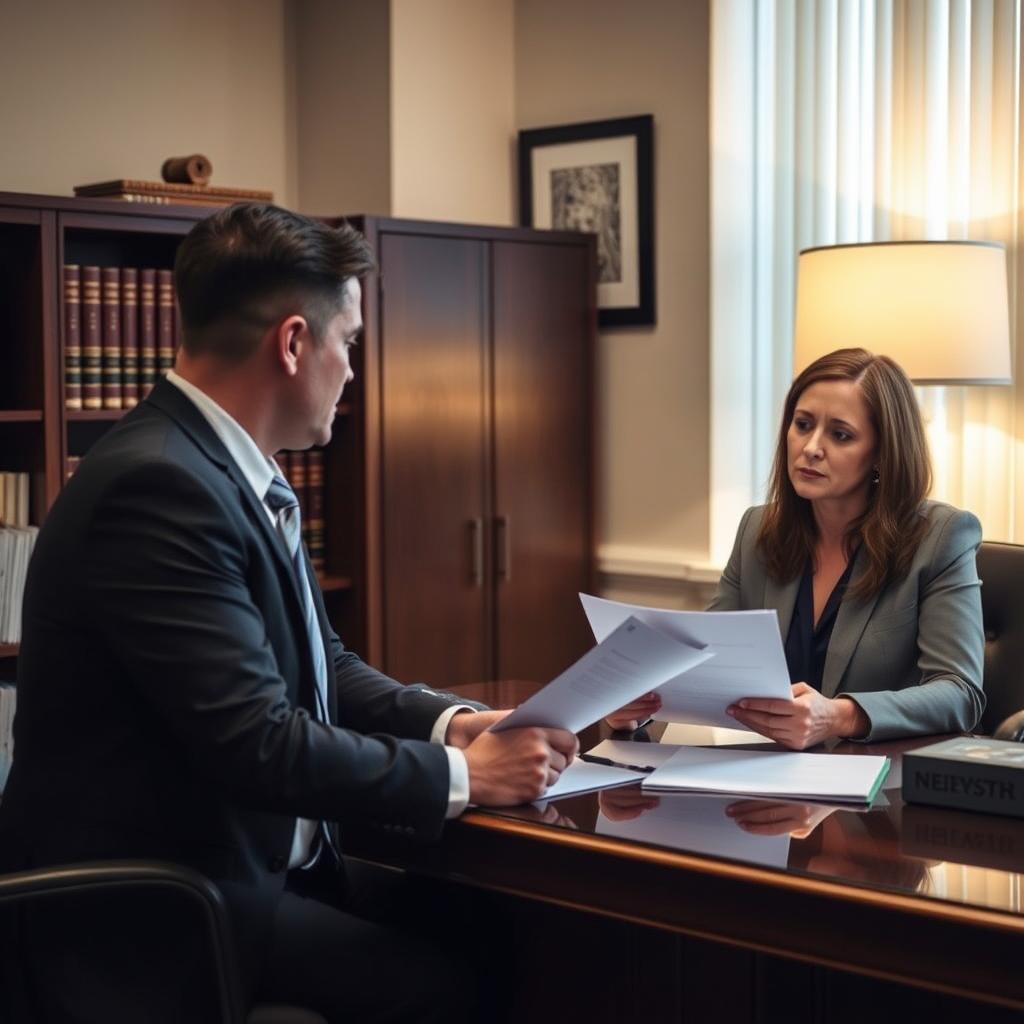
Alimony Modification Lawyer Virginia Beach, VA
Alimony modification in Virginia Beach involves asking the Virginia Beach Circuit Court to increase, decrease, or terminate an existing spousal support obligation because of a material change in circumstances. Mr. Sris and his Of Counsel handle these matters for clients throughout Virginia Beach, Sandbridge, and Oceana. Whether you are the spouse paying support and have experienced a significant income reduction, or the recipient seeking additional support after a change in the other party’s financial situation, a petition to modify alimony requires a clear showing of changed conditions under Virginia law. The Virginia Beach Circuit Court at 2425 Nimmo Parkway, Building 10B, Virginia Beach, VA 23456, has exclusive jurisdiction over divorces and related spousal support issues. Law Offices Of SRIS, P.C. assists with gathering evidence, preparing pleadings, and presenting modification arguments to the court. Reach our firm at (888) 437-7747 to request a consultation. Law Offices Of SRIS, P.C. – Advocacy Without Borders.
Alimony Modification in Virginia Beach Courts
Virginia law permits the modification of spousal support when there has been a material change in circumstances that was not within the contemplation of the parties at the time of the original award. The controlling statutes are Va. Code § 20-107.1 (setting forth spousal support factors) and Va. Code § 20-109 (authorizing modification based on changed circumstances). The Virginia Beach Circuit Court, located within the Fourth Judicial District, hears all petitions to modify alimony that arise from a final decree of divorce. The court examines factors such as the income and earning capacity of each party, changes in health, involuntary job loss, retirement, cohabitation, or remarriage of the recipient.
A spouse seeking modification must file a Complaint with the Circuit Court and provide proper notice to the other party. The petitioner bears the burden of proving a material change. Courts in Virginia Beach apply the statutory factors rigorously and will not modify support unless the evidence clearly demonstrates that the existing order is no longer equitable. Because each party’s financial circumstances and the court’s assessment of those factors can be highly detailed, working with an experienced attorney is important when presenting a modification case. Mr. Sris and his Of Counsel analyze financial records, income trends, and the procedural posture of the original support order to determine whether a modification petition is viable.
How Mr. Sris and His Of Counsel Handle Alimony Modification Cases
When a client contacts Law Offices Of SRIS, P.C. about spousal support modification, Mr. Sris and his Of Counsel begin by reviewing the existing support order, the parties’ current financial affidavits, and the specific change in circumstances that prompted the inquiry. The team evaluates whether the alleged change is substantial and whether it meets the legal threshold for a modification under Virginia law. If the matter proceeds, the firm prepares the necessary pleadings for filing in the Virginia Beach Circuit Court, including a detailed supporting affidavit outlining the changed conditions.
Throughout the process, Mr. Sris and his Of Counsel work to present evidence that clearly demonstrates the material change to the court. This may include pay stubs, tax returns, employment termination notices, medical records, or evidence of cohabitation. The court schedules the hearing on its calendar, and the timeline varies depending on court availability and case complexity. If the parties can reach an agreement on a modified support amount, the firm prepares a consent order for court approval. When agreement is not possible, Mr. Sris and his Of Counsel are prepared to litigate the matter at a hearing before the Virginia Beach Circuit Court.
About Mr. Sris and His Of Counsel Team
Mr. Sris, Owner and Founder of Law Offices Of SRIS, P.C., is a former prosecutor with experience in criminal trial work. He founded the firm in 1997 and is admitted to practice in Virginia, Maryland, the District of Columbia, New Jersey, and New York. Mr. Sris testified before the Virginia House Courts of Justice Committee in support of 2019 HB 635 (chief patron Del. David Bulova). He and the firm’s Of Counsel bring extensive collective legal experience to family law matters, including spousal support modifications. The Of Counsel attorneys, engaged through Excella, assist with case preparation, financial analysis, and courtroom advocacy. Together, Mr. Sris and his Of Counsel work to present the strong case for every client.
Mr. Sris and his Of Counsel serve clients in Virginia Beach and throughout the Hampton Roads region. The firm’s Richmond location supports Virginia Beach cases, and clients can schedule consultations by calling (888) 437-7747.
Frequently Asked Questions
How does a Virginia lawyer defend against alimony modification charges?
An experienced attorney fights a petition to modify spousal support by challenging the claimed material change, arguing that any change was foreseeable, or proving that the payor’s financial situation does not warrant a reduction. In Virginia, modification is not automatic, and the burden is on the moving party. A lawyer representing either side can examine income documentation, employment history, the payor’s voluntary actions (such as quitting a job), and evidence of the recipient’s changed needs. In Virginia Beach, the Circuit Court weighs these factors carefully, and an attorney’s role is to ensure the court has an accurate financial picture and to advocate for an outcome consistent with the evidence.
What should I do if I am facing alimony modification charges in Virginia?
Contact a family law attorney immediately and do not discuss the financial details of your situation with anyone other than your lawyer. If you are the payor, avoid voluntarily reducing income during the proceeding unless it is truly beyond your control. Gather all relevant financial documents, including tax returns, pay stubs, bank statements, and any correspondence about changes in employment. In Virginia Beach, the court expects timely responses, so retaining counsel as soon as you learn of the modification petition is essential. Law Offices Of SRIS, P.C. can advise you quickly on how to proceed.
Can spousal support be modified retroactively in Virginia?
In most cases, spousal support modification is prospective only; Virginia courts generally do not retroactively modify spousal support obligations absent a specific statutory authorization. If you are overpaying or underpaying, the court will set a new support amount effective from the date of the modification order, not from the date the change in circumstances occurred. There are limited exceptions, such as when the parties have an agreement providing for retroactivity. An attorney can explain whether retroactive relief is possible in your particular situation.
What qualifies as a material change in circumstances for alimony modification?
A material change is a significant, unanticipated change in the financial circumstances of either party, such as involuntary job loss, a substantial increase or decrease in income, serious illness, retirement, cohabitation of the recipient with a new partner, or remarriage. Virginia courts look at whether the change was within the contemplation of the parties at the time of the original award. Earning capacity, not just actual income, can be considered if a party is voluntarily underemployed. Because each case is highly fact-specific, a Virginia Beach alimony modification lawyer can assess whether your situation meets the legal standard.
How long does an alimony modification case take in Virginia Beach?
The timeline for an alimony modification case in Virginia Beach varies widely depending on court scheduling, the complexity of the financial issues, and whether the parties can reach an agreement. Uncontested modifications that are settled and presented in a consent order may be resolved relatively quickly once all financial disclosures are exchanged. Contested modifications that require a full evidentiary hearing can take considerably longer. The Virginia Beach Circuit Court’s docket and the need for discovery, expert testimony, or valuation evidence also affect the schedule.
What are the penalties for failing to pay spousal support in Virginia?
Failure to pay spousal support as ordered can result in contempt proceedings, wage garnishment, liens, or even jail time for civil contempt. If a payor falls behind, the recipient can file a show cause petition with the Virginia Beach Circuit Court. The court may compel payment, award attorney fees, and enforce the order through various collection mechanisms. It is critical to address any inability to pay before arrears accumulate. A modification petition is the proper legal avenue, rather than simply stopping payments.
Is Virginia a community property state for spousal support purposes?
No, Virginia is an equitable distribution state. While community property principles do not directly impact spousal support modification, the classification and distribution of marital property can indirectly affect support obligations. The court determines spousal support based on the statutory factors in Va. Code § 20-107.1, including the parties’ earning capacities, obligations, and the standard of living established during the marriage. The equitable distribution of assets may impact a party’s need for support or ability to pay.
Do I need a lawyer for alimony modification in Virginia Beach?
You are not legally required to hire a lawyer, but representing yourself in a spousal support modification proceeding can be challenging because of the detailed financial evidence and legal standards involved. An attorney can present your financial information in the required format, argue the material-change standard effectively, and negotiate on your behalf. If the other side is represented, proceeding without counsel can put you at a disadvantage. For guidance on your specific situation, reach Law Offices Of SRIS, P.C. at (888) 437-7747.
Can alimony be terminated instead of modified?
Yes, alimony can be terminated upon the death of either party, the remarriage of the recipient, or other events specified in the original order or by statute. If the payor can show that the basis for support no longer exists—for example, the recipient has become self-supporting—the court may terminate the obligation entirely. This is often sought in lieu of a simple reduction. A Virginia Beach family law attorney can evaluate whether termination or a reduction is the appropriate remedy in your case.
What if my ex-spouse is living with someone new? Does that affect alimony?
Under Virginia law, cohabitation by the party receiving spousal support in a relationship analogous to marriage may be grounds for termination or reduction of alimony. The statute allows the court to end or modify support if the recipient has been habitually cohabiting with another person in a relationship analogous to marriage for one year or more. Proving cohabitation requires more than mere shared living arrangements; the nature of the relationship and financial interdependence are examined. Mr. Sris and his Of Counsel can help gather evidence of cohabitation and present it to the Virginia Beach Circuit Court.
How do I find an alimony modification lawyer near Virginia Beach, VA?
Look for a family law attorney who concentrates in spousal support matters, has experience with Virginia Beach Circuit Court procedures, and is admitted to practice in Virginia. You can schedule a consultation with Law Offices Of SRIS, P.C. by calling (888) 437-7747. The firm represents clients in Virginia Beach and neighboring communities, and Mr. Sris and his Of Counsel can explain your modification options during the consultation.
Official Virginia Resources:
Va. Code § 20-107.1 – Spousal Support Factors |
Virginia Beach Circuit Court
Attorney advertising. Prior results do not guarantee a similar outcome.
Results may vary.
Case results depend on a variety of factors unique to each case.