
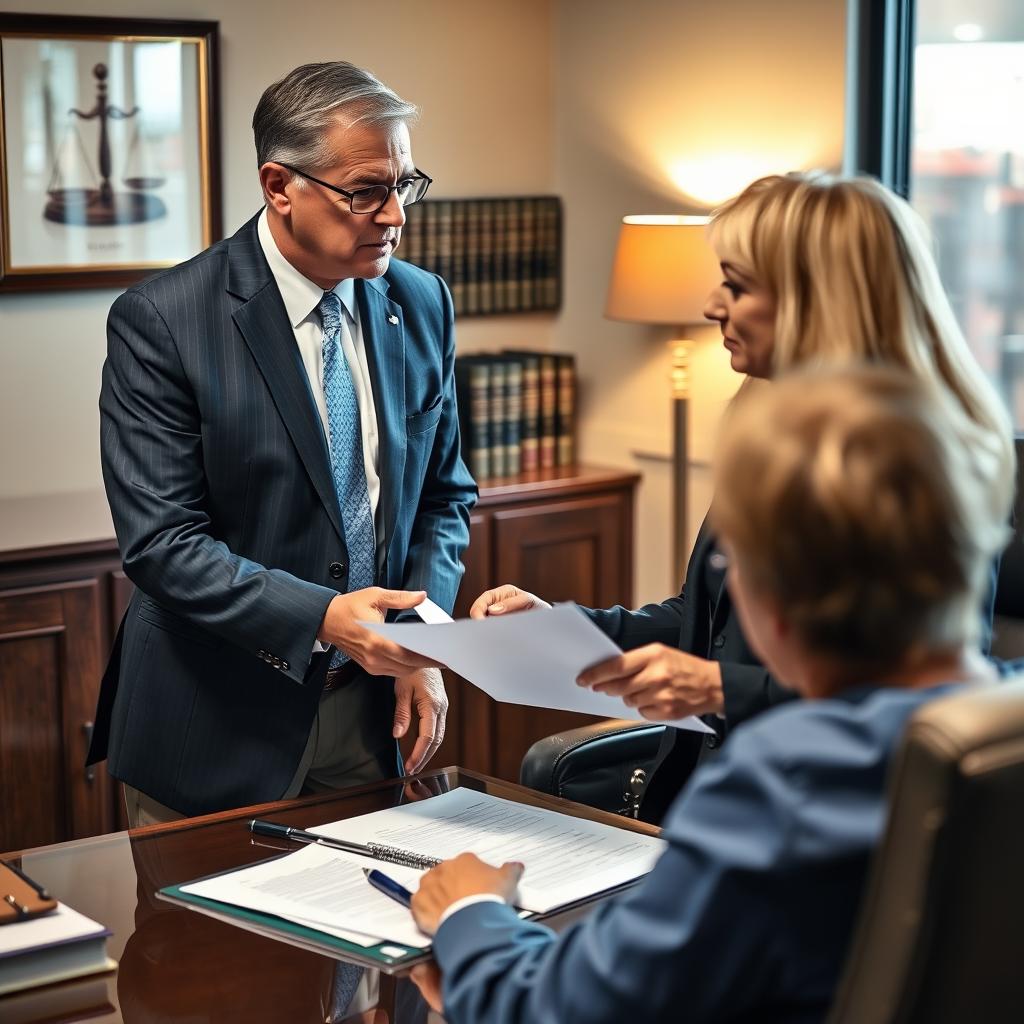
Accessory After the Fact lawyer Poquoson, VA
Being charged as an accessory after the fact in federal court can seem overwhelming. This type of charge arises when a person is accused of assisting someone who has committed a federal crime—knowing that crime was committed—with the intent to prevent that person’s arrest, trial, or punishment. In Poquoson, Virginia, federal cases involving accessory-after-the-fact allegations are handled by the U.S. Attorney’s Office for the Eastern District of Virginia, often relying on investigations by agencies such as the FBI or ATF. Law Offices Of SRIS, P.C., founded in 1997, represents clients in federal criminal matters throughout Virginia, including Poquoson and the nearby communities. Mr. Sris, a former prosecutor, and his Of Counsel team work to build a thorough defense that examines the government’s case, the evidence linking you to the alleged assistance, and the surrounding circumstances. To discuss your situation, reach our firm at (888) 437-7747. Law Offices Of SRIS, P.C. – Advocacy Without Borders.
What Accessory After the Fact Means in Poquoson, Virginia
In the federal system, accessory-after-the-fact charges are prosecuted under 18 U.S.C. § 3. The statute provides that a person who, knowing that an offense against the United States has been committed, receives, relieves, comforts, or assists the offender in order to hinder or prevent the offender’s apprehension, trial, or punishment, faces imprisonment of up to half the maximum term provided for the underlying offense. If the underlying crime carries a life sentence or the death penalty, the imprisonment may not exceed 15 years. Federal prosecution is not a typical state criminal proceeding; there is no parole in the federal system, and sentences often follow the U.S. Sentencing Guidelines.
For individuals in Poquoson, an independent city bordered by the Chesapeake Bay and York County, all federal criminal cases proceed through the U.S. District Court for the Eastern District of Virginia. The court’s Newport News Division—located at 2400 West Avenue, Newport News, VA 23607—typically handles matters arising from Poquoson and the surrounding areas. Because Poquoson does not have its own federal courthouse, residents appear in Newport News for initial appearances, detention hearings, and trial proceedings. The firm’s Richmond location serves clients throughout the Tidewater region, and we work with individuals from Poquoson at every stage, from investigation through sentencing. Although Poquoson is a close-knit community, a federal accessory charge can stem from a wide range of situations, from harboring a relative involved in a white‑collar crime to providing assistance to a friend after a federal drug offense. Each case requires a careful, fact‑specific review.
How Mr. Sris and His Of Counsel Handle Accessory After the Fact Cases
A federal accessory-after-the-fact case typically starts with a federal grand jury investigation or an FBI‑led inquiry that results in an indictment. Mr. Sris and his Of Counsel team focus on early intervention. We examine the government’s theory: did the person actually know about the underlying felony? Was the assistance provided after the fact, and does it fit the statutory definition of “receiving, relieving, comforting, or assisting”? Often, the government must prove the defendant’s specific intent to prevent the principal offender’s arrest or punishment. We look at whether any statements made to law enforcement were obtained improperly, whether the evidence supports the knowledge element, and whether the prosecution has overcharged based on mere association.
Because federal accessory charges are tied to a principal offense—drug trafficking, fraud, firearm violations, or any other federal crime—the defense strategy frequently requires challenging the underlying case as well. Our team works with forensic experts when necessary and identifies procedural weaknesses in the government’s presentation. We also evaluate whether pretrial release can be sought under the Bail Reform Act and seek to negotiate with the U.S. Attorney’s Office for a favorable plea or, where appropriate, take the matter to trial. Throughout the process, clients receive straightforward guidance about the federal sentencing guidelines, the potential for substantial‑assistance departures, and post‑verdict relief.
About Mr. Sris and His Of Counsel Team
Mr. Sris, Owner and Founder of Law Offices Of SRIS, P.C., has practiced law since 1997. As a former prosecutor, he brings an insider’s understanding of how the government builds its cases—experience that directly benefits clients charged with federal crimes. Mr. Sris is admitted in Virginia, Maryland, the District of Columbia, New Jersey, and New York. He testified before the Virginia House Courts of Justice Committee in support of 2019 HB 635 (chief patron Del. David Bulova). He remains actively involved in the firm’s most complex federal matters, including accessory-after-the-fact defense.
Mr. Sris and his Of Counsel team bring extensive combined legal experience. Our collaborative approach allows us to draw on multiple perspectives and handle federal cases with care and precision. Results may vary. in any individual matter. To speak with our firm about an accessory-after-the-fact charge in the Poquoson area, contact us at (888) 437-7747.
Frequently Asked Questions
What is accessory after the fact under federal law?
Federal accessory after the fact is defined by 18 U.S.C. § 3 and involves knowingly assisting someone who committed a federal offense, with the intent to prevent that person’s apprehension, trial, or punishment. The prosecution must prove the defendant knew about the underlying federal crime and acted with the specific purpose of helping the offender evade justice. Even providing temporary shelter or transportation can qualify. Because the charge is tied to the principal offense, penalties vary—imprisonment may be up to one‑half the maximum for the underlying offense, or no more than 15 years if the principal offense carries life imprisonment or the death penalty. Federal sentencing guidelines and the absence of parole make early, strategic defense critical.
How does a Virginia lawyer defend against accessory after the fact charges?
Defense strategies for accessory after the fact in Virginia often focus on challenging the government’s proof of knowledge and intent, as well as examining procedural compliance. A defense may demonstrate that the accused did not know about the underlying felony, that any assistance was not rendered with the specific purpose of hindering law enforcement, or that the prosecution’s evidence was obtained through an unconstitutional search or interview. Because the charge derives from another federal offense, lawyers also scrutinize the principal case for weaknesses. In Poquoson, the federal discovery process and motion practice can reveal whether the U.S. Attorney’s case has the required depth, and a thorough investigation frequently leads to negotiation or dismissal.
What should I do if I am facing federal accessory after the fact charges in the Poquoson area?
If you are facing accessory‑after‑the‑fact charges in the Poquoson area, your first step should be to consult a federal criminal defense attorney immediately and avoid discussing the case with anyone except your lawyer. Federal investigations move quickly, and anything you say to agents or even to family members can be used as evidence. Preserve any documents or communications that may be relevant, and do not attempt to contact the principal offender without legal advice. The U.S. District Court for the Eastern District of Virginia imposes firm deadlines, and early representation ensures you understand the charges, potential bail conditions, and the procedural options available.
What are the penalties for accessory after the fact in federal court?
Under 18 U.S.C. § 3, a person convicted as an accessory after the fact may receive imprisonment of up to one‑half the maximum term authorized for the underlying federal offense, and if the underlying crime carries a life sentence or the death penalty, the maximum term is 15 years. In addition, fines, supervised release, and collateral consequences—such as loss of professional licenses or firearm rights—may apply. The U.S. Sentencing Guidelines influence the actual sentence, taking into account the defendant’s role, acceptance of responsibility, and the nature of the principal offense. Federal law has no parole, so good‑time credit is limited; the sentence imposed is generally the sentence that will be served.
How is a federal accessory-after-the-fact case different from a state charge?
Federal accessory‑after‑the‑fact cases are prosecuted by the U.S. Attorney’s Office in federal district court, with stricter penalties, no parole, and sentencing controlled by the U.S. Sentencing Guidelines—unlike most state proceedings which may involve more judicial discretion and parole eligibility. Federal cases often involve nationwide investigative resources, such as the FBI or DEA, and the government’s conviction rate is high. Procedurally, federal courts operate under the Federal Rules of Criminal Procedure, with their own timelines and pretrial‑release standards. In Poquoson, the U.S. District Court for the Eastern District of Virginia (Newport News Division) has its own local practices and expectations that differ from state‑level courts.
If you need legal guidance regarding an accessory‑after‑the‑fact charge, contact Law Offices Of SRIS, P.C. at (888) 437-7747.
Official Primary‑Source Information
- U.S. District Court for the Eastern District of Virginia
- 18 U.S.C. § 3 (Accessory after the fact) via Cornell LII
Attorney advertising. Prior results do not guarantee a similar outcome. Results may vary.
Case results depend on a variety of factors unique to each case.