
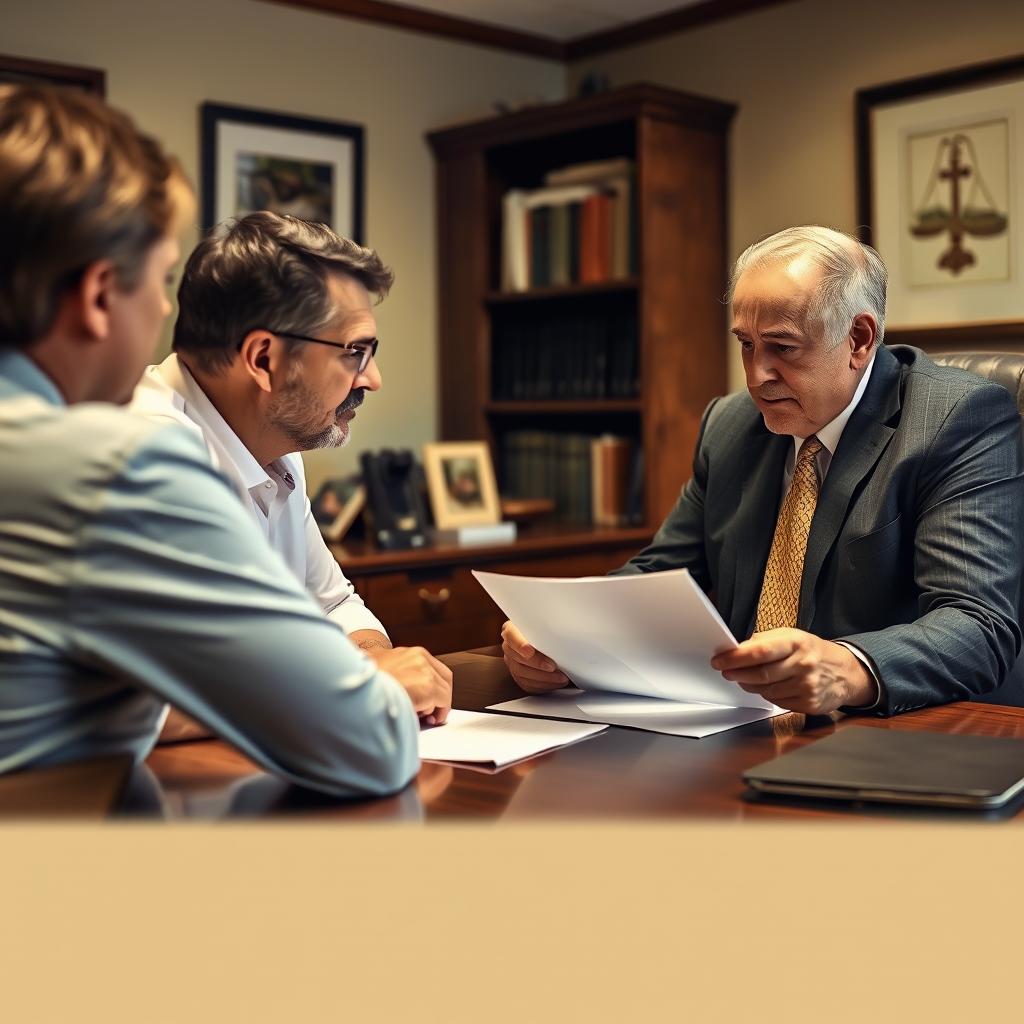
Arson/Bombing of Federal Property lawyer James City County, VA
Federal arson and bombing charges involving government buildings, military installations, or other federal property are among the most actively prosecuted offenses in the country. When the United States Attorney’s Office for the Eastern District of Virginia brings charges under 18 U.S.C. § 844, the stakes are immediate and severe. The investigation is often led by the FBI, ATF, or other federal agencies, and there is no parole in the federal system. Conviction rates in federal court are high. For a resident of James City County, or for anyone whose matter is set for hearing before the U.S. District Court for the Eastern District of Virginia—including the Newport News Division at 2400 West Avenue—early engagement with experienced federal defense counsel can materially affect the course of the case. Law Offices Of SRIS, P.C., through Mr. Sris, represents individuals facing arson and bombing charges under federal law. Reach the firm at (888) 437-7747 to schedule a consultation. Law Offices Of SRIS, P.C. – Advocacy Without Borders.
Understanding Federal Arson and Bombing Charges in James City County
Arson and bombing of federal property are prosecuted in the U.S. District Court for the Eastern District of Virginia, not in James City County’s state circuit or general district courts. Federal jurisdiction attaches when the damaged structure is a federal building, a national park, a military installation, or any property owned or leased by the United States. The statute most commonly charged is 18 U.S.C. § 844, which covers malicious damage or destruction by fire or explosive to property owned or possessed by the United States, or to property used in or affecting interstate commerce. The penalties can include decades in federal prison, substantial fines, and restitution orders. The U.S. Sentencing Guidelines apply, and federal judges retain authority to impose sentences that reflect the gravity of the offense.
Residents of James City County—whose communities include Williamsburg, Norge, Toano, and Lightfoot—are served by our Richmond Location. Although the nearest federal courthouse for James City County matters is the Newport News Division at 2400 West Avenue, initial appearances, detention hearings, and trial proceedings may also take place at the Richmond or Alexandria divisions, depending on the investigation’s origination. An attorney with experience in the Eastern District’s local procedures can help clients understand what to expect at each stage, from the magistrate’s probable-cause determination to the eventual district court trial or plea negotiation.
How the Firm Approaches These Cases
The firm approaches federal arson and bombing cases with attention to the investigative record. Federal charges often follow a lengthy grand jury investigation, leaving the defense the task of reviewing search warrant affidavits, forensic reports, witness statements, and agency files. Early retention of counsel can influence decisions about pretrial release, conditions of supervision, and the scope of discovery. The firm works to identify weaknesses in the prosecution’s evidence, examine compliance with federal procedural requirements, and present mitigating information to the U.S. Attorney’s Office or the court when it matters most.
Mr. Sris, Owner and Founder of Law Offices Of SRIS, P.C., is a former prosecutor who has practiced federal criminal defense since founding the firm in 1997. His background provides insight into how federal prosecutors construct their cases under the U.S. Sentencing Guidelines. The firm brings extensive legal experience. Results may vary. The team works collaboratively to develop a defense strategy tailored to the specific federal charges and the client’s circumstances.
Frequently Asked Questions
How does a Virginia lawyer defend against arson/bombing of federal property charges?
A Virginia federal criminal defense lawyer builds a defense by examining the government’s evidence, raising procedural objections, and contesting elements of the charge such as the structure’s federal character or the defendant’s intent. Defense strategies may include challenging the admissibility of statements, the validity of search warrants, the reliability of forensic evidence, and the sufficiency of proof that the property qualifies as federal. The lawyer may negotiate with the prosecutor to reduce the charge or sentence, or, if warranted, prepare for trial by identifying weaknesses in witness testimony and experienced attorney analysis.
What should I do if I am facing arson/bombing of federal property charges in Virginia?
If you are facing federal arson or bombing charges, do not discuss the facts with anyone except your lawyer and contact a federal criminal defense attorney immediately. Preserve any documents, photographs, and records that may be relevant to your case. Be aware that federal agents may attempt to question you without an attorney present; you have the right to decline to answer questions until you have counsel. Early retention of an attorney can influence decisions about detention, the timing of an indictment, and the scope of the investigation.
What are the penalties for arson/bombing of federal property in Virginia?
Penalties for federal arson or bombing under 18 U.S.C. § 844 can include a term of imprisonment potentially reaching decades, coupled with substantial fines and supervised release for years after incarceration. The sentence depends on the application of the U.S. Sentencing Guidelines, any statutory mandatory minimums, the extent of property damage or personal injury, and the defendant’s criminal history. Because there is no parole in the federal system, the sentence imposed will largely determine the time actually served, subject to limited good-conduct credits.
How do federal sentencing guidelines work for these charges?
Federal sentencing for arson and bombing offenses follows the U.S. Sentencing Guidelines, which calculate an advisory range based on the offense level, specific offense characteristics, and the defendant’s criminal history category. The court will also consider statutory factors such as the amount of loss, the risk of death or serious injury created, and whether the offense involved a federal crime of terrorism. A lawyer can present mitigation evidence—including lack of criminal history, acceptance of responsibility, and other relevant circumstances—to seek a sentence at the lower end of, or below, the advisory range.
Do I need a lawyer for federal arson charges in James City County?
Yes. Federal arson charges are serious felony offenses prosecuted by the U.S. Attorney’s Office, and navigating the federal system without experienced counsel poses significant risks. A federal defense attorney can evaluate the indictment, move for a pretrial release or detention hearing, negotiate with the government, and protect your rights during all stages of the proceedings. The Office of the Federal Public Defender may be available if you qualify financially, but many individuals choose to retain private counsel for more individual case review to their defense.
What is the statute of limitations for federal arson charges?
Arson and bombing offenses under 18 U.S.C. § 3295 are not subject to a statute of limitations if they result in death; otherwise, the general federal felony limitations period of five years under 18 U.S.C. § 3282 generally applies. The specific limitation period may be extended by the time the defendant is outside the United States or by other tolling provisions. Prompt legal consultation helps ensure that any limitations defense is preserved and that you are aware of your procedural options.
Can federal arson charges be dropped?
Federal prosecutors retain broad discretion to dismiss charges, but dismissal typically occurs only when there are evidentiary weaknesses or constitutional violations. An attorney can file motions to suppress evidence obtained in violation of the Fourth Amendment, challenge an indictment for failing to state an offense, or demonstrate that an essential element of the crime is unsupported. If the government’s case is compromised, the prosecutor may move to dismiss the charges or negotiate a significantly reduced resolution.
What is the role of a magistrate judge in federal cases?
A United States Magistrate Judge presides over initial appearances, detention hearings, and preliminary hearings, and may manage discovery and pretrial motions by consent of the parties. In a federal arson case, the magistrate will advise the defendant of the charges, determine whether to release the defendant pending trial, and, if the defendant does not waive a preliminary hearing, decide whether probable cause exists. The magistrate does not decide guilt; that authority rests with the district judge or jury.
How is the value of the damaged property determined for sentencing?
Under the sentencing guidelines, the value of the damaged property is determined using the greater of the fair market value, the cost of repair, or the replacement cost. For a fire or explosive causing extensive destruction, the government typically presents expert testimony and documentary evidence to establish the loss amount. The defense can challenge that valuation by cross-examining the government’s attorneys, presenting competing estimates, or demonstrating that the government’s calculations are inflated.
Will my case stay in the Newport News Division?
An indictment returned in the Eastern District of Virginia may be tried in any division of the district; while many James City County-related matters are heard in Newport News, the case can also proceed in Richmond or Alexandria depending on scheduling and convenience of the parties. The choice of division can affect travel and local jury composition, so a defense attorney evaluates whether a motion for intra-district transfer would benefit the client. The assignment is ultimately decided by the court.
What happens if I am convicted of a federal arson charge?
If convicted, the court will schedule a sentencing hearing, during which the judge will consider the advisory guideline range, any mandatory minimums, and the factors set forth in 18 U.S.C. § 3553(a) before imposing sentence. Post-conviction, a defendant may appeal to the U.S. Court of Appeals for the Fourth Circuit, raising issues of trial error or sentence reasonableness. A defendant may also seek a reduction of sentence through limited mechanisms such as substantial assistance to the government or compassionate release. Federal convictions carry long-term collateral consequences, including restrictions on firearm ownership, voting rights, and employment opportunities.
About Mr. Sris and the Firm
Mr. Sris, Owner and Founder of Law Offices Of SRIS, P.C., has concentrated his practice on federal criminal defense since establishing the firm in 1997. He is a former prosecutor and is admitted to practice before the U.S. District Court for the Eastern District of Virginia. Mr. Sris testified before the Virginia House Courts of Justice Committee in support of 2019 HB 635 (chief patron Del. David Bulova). His experience includes representing individuals charged with serious federal offenses, and he maintains a personal focus on cases requiring advanced strategic preparation.
The team works collaboratively to build a defense informed by the rules of federal procedure, the U.S. Sentencing Guidelines, and the expectations of the Eastern District bench.
To schedule a consultation, reach Law Offices Of SRIS, P.C. at (888) 437-7747. The Richmond Location—7400 Beaufont Springs Drive, Suite 300, Room 395, Richmond, VA 23225—serves clients in James City County and throughout central and eastern Virginia by appointment.
Our practice also serves these nearby areas: York County federal criminal defense, Williamsburg federal criminal lawyer, Fairfax County federal charges, Fairfax City federal defense, and Falls Church federal criminal attorney.
Primary source references: U.S. District Court for the Eastern District of Virginia | 18 U.S.C. § 844 — Penalties for use of fire or explosives | Virginia Judicial System.
Reviewed by Mr. Sris, Owner and Founder. Admitted in Virginia, Maryland, District of Columbia, New Jersey, and New York. Practicing since 1997. Last reviewed: July 2026.
Attorney advertising. Prior results do not guarantee a similar outcome. Results may vary.
Case results depend on a variety of factors unique to each case.