
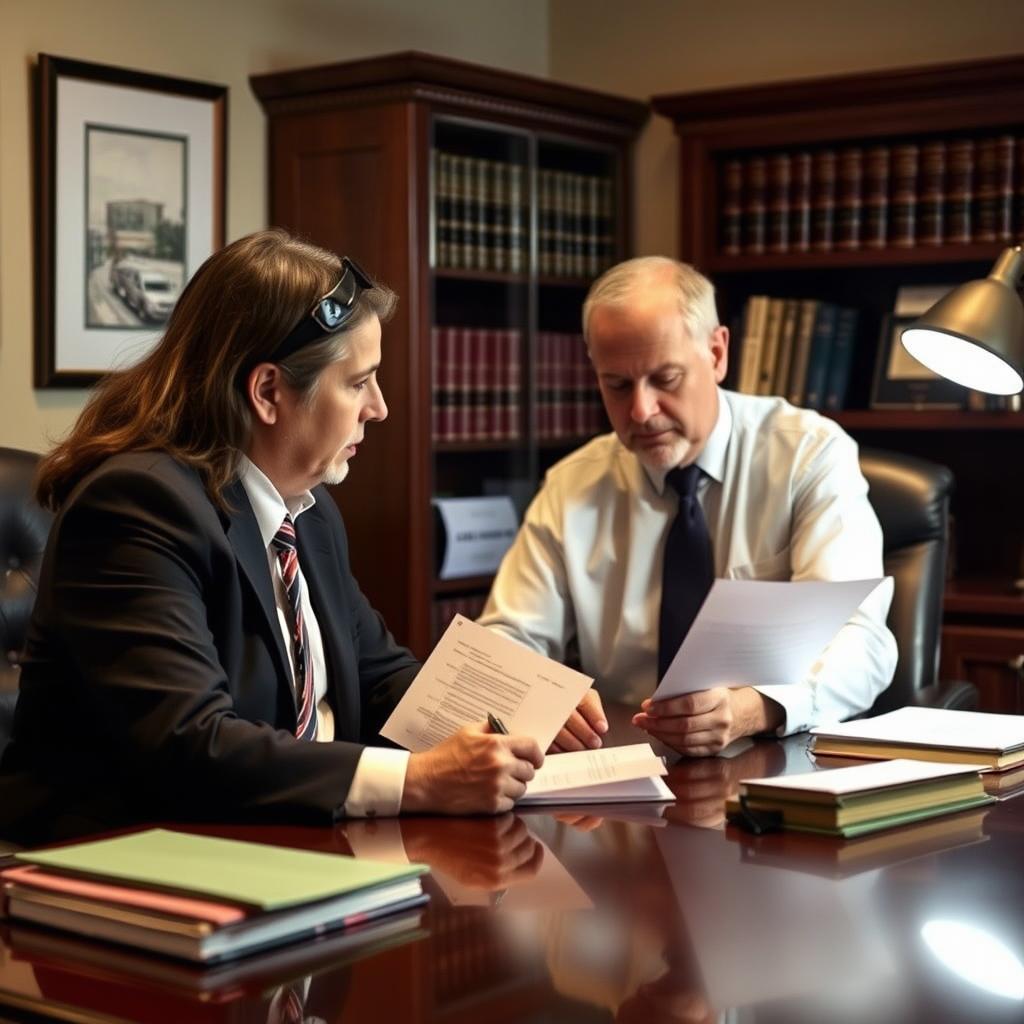
Tax Evasion lawyer Isle of Wight County, VA
Federal tax evasion (26 U.S.C. § 7201) is a felony that carries a maximum sentence of five years in prison and fines for individuals or corporations. When the IRS Criminal Investigation Division opens a case in Isle of Wight County, the matter typically proceeds in the U.S. District Court for the Eastern District of Virginia. A conviction means no parole, a federal record, and collateral consequences that can follow a person for life. Law Offices Of SRIS, P.C. Concentrates its practice on federal criminal defense, including tax evasion charges, and represents clients across the county from its Richmond location. Mr. Sris, Owner and Founder of the firm, is a former prosecutor who has practiced since 1997 and is admitted in Virginia, Maryland, the District of Columbia, New Jersey, and New York. If you have been contacted by an IRS special agent, received a target letter, or believe you are under investigation, reach Mr. Sris and the firm’s Of Counsel attorneys at (888) 437-7747. Law Offices Of SRIS, P.C. – Advocacy Without Borders.
What Tax Evasion Means in Isle of Wight County
Isle of Wight County sits within the Eastern District of Virginia, a federal jurisdiction known for its rapid docket and high conviction rates. Tax evasion cases filed here are prosecuted by the U.S. Attorney’s Office, often working directly with IRS Criminal Investigation agents. The Eastern District has divisions in Alexandria, Richmond, Norfolk, and Newport News; matters arising in Isle of Wight County are most frequently handled in the Newport News or Norfolk divisions, depending on the assignment. A federal investigation into suspected tax evasion is methodical and document-intensive—bank records, tax returns, business ledgers, and communications are scrutinized, and agents may interview former employees, accountants, or business partners before seeking an indictment.
Unlike a state tax matter, a federal tax evasion charge is built under Title 26 and the Federal Sentencing Guidelines. The government must prove that the accused acted willfully—that the underpayment or non-payment of tax was not an honest mistake but an intentional act. Because these cases are tried in federal court, the procedural rules differ from those in state court, including stricter evidentiary requirements, the use of grand jury indictments for felonies, and the absence of parole. A defendant facing a federal tax charge needs counsel familiar with the Eastern District’s practices, the local U.S. Attorney’s priorities, and the nuances of the sentencing guidelines that will govern any potential sentence.
How Mr. Sris and the Firm’s Of Counsel Attorneys Handle Tax Evasion Cases
The defense of a federal tax evasion charge often begins before an indictment is returned. Mr. Sris and the firm’s Of Counsel attorneys work to protect the client during the investigation stage—communicating with IRS agents, reviewing subpoenaed documents, and presenting mitigating information to the government when appropriate. The goal is to shape the record early, whether that means demonstrating that no willful act occurred, identifying inaccurate financial assumptions, or establishing that the client relied in good faith on professional advice. If charges are filed, the defense team scrutinizes the government’s evidence for constitutional violations, chain-of-custody gaps, and analytical errors in the tax-loss calculation, which directly affects the sentencing guidelines range.
At every phase, the firm’s approach is substantive, not superficial. The attorneys prepare for trial while simultaneously exploring resolution options, including discussions with the Assistant U.S. Attorney about amended charges or the application of downward departures where the facts support them. Because Mr. Sris is a former prosecutor, he understands the evaluation the U.S. Attorney’s Office will make when deciding whether to offer a plea or proceed to trial. The firm’s federal practice draws on extensive collective experience between Mr. Sris and the Of Counsel attorneys, and each case receives careful, individual case review rather than a formulaic defense. The team addresses tax-evasion charges as fact-intensive undertakings, recognizing that the difference between a probationary sentence and a prison term often turns on how the government’s case is challenged at the pretrial and trial stages.
About Mr. Sris and the Firm’s Of Counsel Attorneys
Mr. Sris is the Owner and Founder of Law Offices Of SRIS, P.C., which has been practicing since 1997. He is a former prosecutor who brings that perspective to federal criminal defense matters, including tax evasion. Admitted in Virginia, Maryland, the District of Columbia, New Jersey, and New York, he has represented clients in federal district courts across the firm’s multistate footprint. Mr. Sris testified before the Virginia House Courts of Justice Committee in support of 2019 HB 635 (chief patron Del. David Bulova). His involvement in the legislative process demonstrates a commitment to the legal system that extends beyond individual case representation.
The firm’s Of Counsel attorneys contribute wide-ranging backgrounds in criminal litigation and federal practice. Mr. Sris and the firm’s Of Counsel attorneys bring extensive combined legal experience. Results may vary. The collective capability of the firm’s attorneys allows Law Offices Of SRIS, P.C. to handle tax evasion cases that demand careful financial analysis, thorough motion practice, and experienced courtroom advocacy. All attorneys work from the firm’s locations by appointment only, and clients in Isle of Wight County are served from the Richmond location.
Frequently Asked Questions
What is federal tax evasion under 26 U.S.C. § 7201?
Federal tax evasion (26 U.S.C. § 7201) is a felony that makes it a crime to willfully attempt to evade or defeat any tax imposed under the Internal Revenue Code. The statute reaches conduct beyond simply failing to pay—it covers any affirmative act of evasion, such as filing false returns, concealing assets, keeping double books, or using nominee entities. The government must prove willfulness, meaning the defendant knew of the tax obligation and intentionally violated it. An honest mistake or negligence does not satisfy the mental-state requirement, and many tax-evasion cases turn on whether the government can establish that the defendant acted with specific intent to break the law.
What are the penalties for federal tax evasion in Virginia?
A conviction for tax evasion carries a statutory maximum of five years in federal prison per count, plus fines for individuals or corporations. In addition to criminal penalties, the defendant may face civil fraud penalties, restitution orders, and the cost of prosecution. Under the Federal Sentencing Guidelines, actual prison exposure is calculated using the tax loss table—the greater the amount the government claims was evaded, the higher the offense level. Because there is no parole in the federal system, a defendant serves at least 85 percent of any sentence imposed. A judge may also impose a term of supervised release following incarceration.
How does the IRS investigate tax evasion in Isle of Wight County?
The IRS Criminal Investigation Division investigates suspected tax evasion cases, often coordinating with the U.S. Attorney’s Office for the Eastern District of Virginia. An investigation may begin with a referral from an IRS revenue agent or an informant, or it may emerge from an audit that reveals discrepancies suggesting intentional conduct. Special agents use subpoenas, search warrants, and interviews to gather evidence. Before filing criminal charges, the IRS-CI and U.S. Attorney’s Office review the case for prosecution potential. If an indictment is returned, the matter proceeds in the U.S. District Court for the Eastern District, which has jurisdiction over offenses occurring in Isle of Wight County.
Can I be charged with tax evasion for failing to file a return?
Failing to file a tax return is a separate misdemeanor under 26 U.S.C. § 7203, but a repeated failure to file combined with other deceptive conduct can support a felony tax-evasion charge. The key distinction is that evasion requires an affirmative act beyond mere non-filing. For example, if someone fails to file returns for several years while also stowing assets in a foreign bank account and making false statements to IRS agents, the government may charge both failure to file and evasion. An attorney can help evaluate whether the government’s evidence demonstrates willful evasion or simply non-compliance, which carries different penalties and sentencing exposures.
What should I do if I am under investigation for tax evasion?
If you learn that you are under investigation for tax evasion, contact an experienced federal criminal defense attorney immediately and decline to speak with investigators without counsel present. Statements made to IRS-CI agents during an interview—even informal ones—can become central evidence in a later prosecution. An attorney can communicate with the government on your behalf, help preserve records, and begin assembling the financial evidence and legal arguments that may influence charging decisions or guide a defense. Early involvement of counsel is one of the most impactful steps a person under investigation can take to protect their rights.
How can a federal criminal lawyer defend a tax-evasion case?
A federal criminal lawyer may challenge the government’s proof of willfulness, attack the accuracy of the tax-loss calculation, contest the admissibility of evidence, or present an affirmative defense such as reliance on professional advice. Because tax evasion is a specific-intent crime, showing that the defendant relied in good faith on a qualified accountant or attorney can negate the element of willfulness. Other defense strategies include demonstrating that the government’s financial analysis overstates the amount of tax due or that key documents were obtained in violation of the Fourth Amendment. For a consultation about your specific circumstances, reach Law Offices Of SRIS, P.C. at (888) 437-7747.
Navigate to related pages:
Federal Criminal Lawyer Fairfax County |
Federal Criminal Lawyer Fairfax (City) |
Federal Criminal Lawyer Falls Church (City) |
Federal Criminal Lawyer Prince William County |
Federal Criminal Lawyer Manassas (City)
Additional resource: U.S. District Court for the Eastern District of Virginia — vaed.uscourts.gov
Attorney advertising. Prior results do not guarantee a similar outcome. Results may vary. Case results depend on a variety of factors unique to each case.