
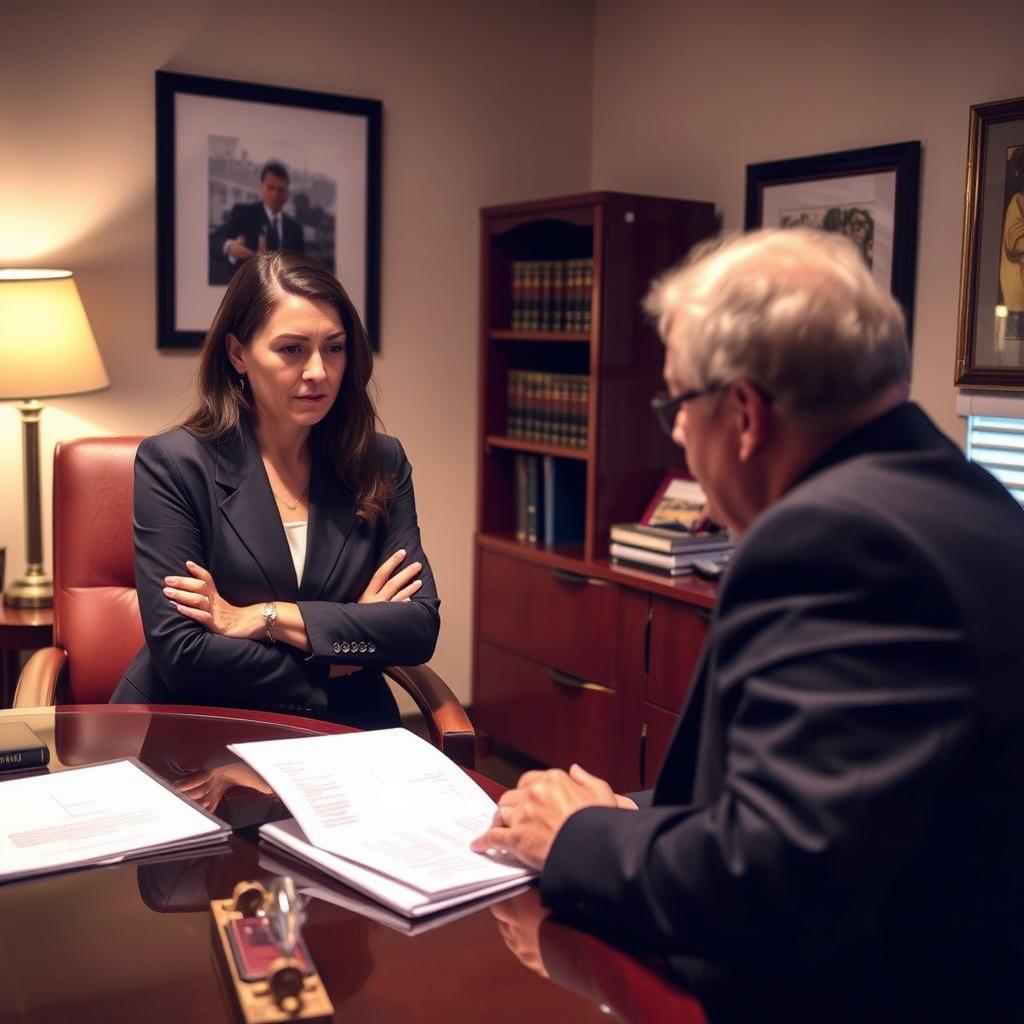
Attempt lawyer Isle of Wight County, VA
Federal criminal charges involving attempt—whether conspiracy, solicitation, or a substantial step toward a completed offense—are prosecuted actively by the United States Attorney’s Office in the Eastern District of Virginia. If you are under investigation or facing an indictment for an attempt offense in Isle of Wight County, Virginia, you need a defense attorney who understands how federal attempt liability works, how the U.S. Sentencing Guidelines apply, and what pretrial and trial strategies are available in the Newport News and Richmond divisions of the Eastern District. Law Offices Of SRIS, P.C. represents clients charged with federal attempt offenses in Isle of Wight County, from Smithfield and Windsor to Carrollton and the surrounding communities. Mr. Sris, Owner and Founder of the firm, and his Of Counsel bring extensive combined legal experience to federal criminal defense. The federal system offers no parole, carries mandatory minimums for many offenses, and imposes sentencing ranges calculated under the advisory Guidelines. Early intervention—often before an indictment is returned—can shape whether charges are filed, what the charges are, and the conditions of pretrial release. To discuss your situation with an experienced federal criminal defense team, reach Law Offices Of SRIS, P.C. at (888) 437-7747. Law Offices Of SRIS, P.C. – Advocacy Without Borders.
What Attempt Charges Mean in Isle of Wight County
Federal attempt charges arise when a person intends to commit a federal crime and takes a substantial step toward its commission—even if the underlying crime was never completed. Prosecutors rely on 18 U.S.C. § 1113 and numerous specific offense statutes to charge attempt as a standalone crime that carries the same maximum penalties as the completed offense. In Isle of Wight County, federal criminal matters are heard in the U.S. District Court for the Eastern District of Virginia, typically in the Newport News Division (2400 West Avenue, Newport News, VA 23607) or the Richmond Division (701 East Broad Street, Richmond, VA 23219). The U.S. Attorney’s Office prosecutes these cases after investigation by federal agencies such as the FBI, DEA, IRS-CI, or ATF. A grand jury indictment is required for felony attempt charges. The procedural path—initial appearance before a magistrate judge, detention hearing, arraignment, discovery, motions, and potential trial—follows the Federal Rules of Criminal Procedure. Sentencing, if a conviction occurs, is governed by the U.S. Sentencing Guidelines, which remain advisory but heavily influence the court’s decision. Law Offices Of SRIS, P.C. works with clients at every stage, from the investigative phase through post-conviction proceedings, focusing on protecting rights and developing a thorough defense tailored to the particular facts and the federal system’s unique demands.
Isle of Wight County is part of the Fifth Judicial District of Virginia for state court purposes, but federal jurisdiction is separate. The county’s proximity to major transportation corridors—Route 10, Route 258, and Route 17—means that federal investigations sometimes encompass activities across multiple localities. An experienced federal defense attorney examines not only the immediate charging documents but the full scope of the investigation, including electronic surveillance, witness interviews, and forensic evidence compiled by federal agents. Because attempt charges often involve an undercover operation or a cooperating witness, the defense may challenge the sufficiency of the government’s proof that the defendant took a substantial step or had the requisite intent. Mr. Sris and his Of Counsel evaluate these issues early and work toward outcomes that minimize exposure to lengthy federal sentences.
How Mr. Sris and His Of Counsel Handle Federal Attempt Cases
Federal attempt prosecutions require a defense that is grounded in both the substantive law of attempt and the procedural realities of federal court. Mr. Sris and his Of Counsel begin by analyzing the indictment or complaint to identify the specific federal statute the defendant is accused of attempting to violate. They then assess whether the government can meet its burden on the three essential elements: (1) the defendant had the specific intent to commit the underlying federal crime, (2) the defendant took a substantial step toward committing that crime, and (3) the substantial step strongly corroborates the defendant’s criminal intent. Mere preparation, without a substantial step that crosses the line from planning to perpetration, is not sufficient to sustain an attempt conviction. The team examines the timing and content of communications, the nature of any overt acts alleged, and the reliability of any confidential informants or cooperating witnesses. Pretrial motions may challenge the sufficiency of the indictment, the admissibility of evidence, or the legality of the investigation. In many cases, early engagement allows the defense to present mitigating information to the U.S. Attorney’s Office before charges are filed, potentially experienced to a declination of prosecution or a charge less severe than the completed offense.
The federal sentencing guidelines for attempt offenses mirror those for the underlying substantive crime. That means a defendant convicted of attempting to distribute a controlled substance faces the same guideline range and the same mandatory minimums as a defendant convicted of actual distribution. The team at Law Offices Of SRIS, P.C., prepares for sentencing by presenting arguments for downward departures—such as acceptance of responsibility, safety-valve eligibility, or substantial assistance—when applicable. Because the federal system has no parole, every month of the sentence matters. The firm’s approach is to challenge the government’s case at every stage while preparing a comprehensive mitigation case that can influence both plea negotiations and sentencing. Throughout the process, clients are kept informed of the status of their case and the strategic options available, so they can make informed decisions about how to proceed.
About Mr. Sris and His Of Counsel Team
Mr. Sris, Owner and Founder of Law Offices Of SRIS, P.C., has practiced law since 1997 and is admitted in Virginia, Maryland, the District of Columbia, New Jersey, and New York. A former prosecutor, Mr. Sris understands how federal cases are built by the government and uses that insight to develop defense strategies that address the strengths and weaknesses of each case. He testified before the Virginia House Courts of Justice Committee in support of 2019 HB 635 (chief patron Del. David Bulova). Mr. Sris and his Of Counsel bring extensive combined legal experience to federal criminal defense. The firm’s Of Counsel team includes attorneys with thorough knowledge of federal criminal procedure, the U.S. Sentencing Guidelines, and trial advocacy in the Eastern District of Virginia. Because Law Offices Of SRIS, P.C. is a multi-state practice, the team routinely handles matters that cross jurisdictional lines and involve coordination with federal agencies in multiple locations. Results may vary.
The firm’s Richmond Location serves clients in Isle of Wight County and throughout central and southeastern Virginia. By appointment only, call (888) 437-7747 to schedule a consultation. The team welcomes inquiries from individuals, families, and businesses facing federal criminal investigations or charges involving attempt, conspiracy, solicitation, or related inchoate offenses.
Frequently Asked Questions
What constitutes a “substantial step” in a federal attempt case?
A substantial step is an action that goes beyond mere preparation and strongly corroborates the defendant’s criminal intent. Federal courts look at the totality of the circumstances to determine whether the defendant’s conduct crossed the line from planning to perpetration. Examples may include reconnoitering the scene of the contemplated crime, obtaining materials essential to carry out the offense, or communicating detailed plans to a co-conspirator or undercover agent. The precise boundary between preparation and a substantial step is fact‑specific and is often a central issue in attempt prosecutions. An experienced federal defense attorney assesses the facts to challenge whether the government’s evidence satisfies this element.
How are attempt charges different from conspiracy charges in federal court?
An attempt charge requires a substantial step toward the crime, while a conspiracy charge requires an agreement between two or more persons to commit a crime. The two are often charged together, but they are distinct offenses with different proof requirements. Attempt focuses on the defendant’s own conduct and intent; conspiracy requires proof of an agreement, even if no overt act is taken in furtherance of the conspiracy under some federal statutes. Both carry the same maximum penalties as the completed offense under federal law. A defense strategy that addresses one may not necessarily resolve the other, so it is critical to have counsel who can analyze each charge on its own terms.
What federal agencies investigate attempt offenses in Virginia?
The agency depends on the underlying substantive crime. The FBI, DEA, IRS-CI, ATF, Homeland Security Investigations, and the U.S. Secret Service are among the federal agencies that investigate attempt cases. In Isle of Wight County, a federal investigation may originate from a referral by local law enforcement or from an independent multi‑agency task force. Federal agents have substantial resources and often employ undercover operations, electronic surveillance, and cooperating witnesses to build attempt cases. Understanding the investigative techniques used and the rules that govern them can be important for mounting a defense that challenges the reliability and legality of the evidence.
Can federal attempt charges be dismissed before trial?
Yes, they can—through a motion to dismiss, a successful challenge to the evidence, or a declination by the U.S. Attorney’s Office. If the indictment fails to allege an essential element of the offense, or if the government’s evidence does not show a substantial step, defense counsel may file a motion to dismiss. In some cases, presenting exculpatory evidence or legal arguments to the prosecutor before charges are filed or before trial can lead to a dismissal or a reduction in the charges. Each case is unique, and early intervention by an experienced federal criminal lawyer can materially affect the outcome.
What should I do if I am contacted by a federal agent about an attempt investigation?
Politely decline to speak with the agent and contact a federal criminal defense lawyer immediately. Anything you say can be used against you. Federal agents are trained interrogators, and casual conversation can easily become incriminating. Do not consent to a search. Do not discuss the matter with friends, family, or colleagues. Preserve any documents that might be relevant, but do not destroy evidence. An attorney can communicate with the agents on your behalf, determine the scope of the investigation, and advise you on whether and how to cooperate, if at all. Early legal advice is critical because what you say or do before an attorney is involved can be difficult to undo.
How do federal sentencing guidelines apply to attempt charges?
The Sentencing Guidelines treat attempt offenses under the same guideline range as the completed offense, with potential adjustments for acceptance of responsibility and other factors. Under U.S.S.G. § 2X1.1, the base offense level for an attempt is generally the same as for the substantive offense, minus three levels if the attempt was not completed—unless the defendant completed all the acts believed necessary to commit the crime or the circumstances demonstrate that the defendant was about to complete them but for apprehension. Mandatory minimum statutes, such as those for drug trafficking or firearms offenses, apply to attempt, conspiracy, and solicitation with the same force as to the completed crime. Because there is no parole in the federal system, understanding the guidelines calculation and available departures is essential to any defense strategy.
Do I need a lawyer if I am only a target of an investigation and not yet charged?
Yes. Federal investigations can last months or years before charges are filed, and having a lawyer early can make a significant difference in the outcome. An attorney can monitor the investigation, communicate with investigators, and present exculpatory information before the government makes a charging decision. In some cases, early legal advocacy persuades the U.S. Attorney’s Office not to pursue charges. If charges are inevitable, early preparation allows the defense to be ready for the initial appearance and detention hearing, where a person’s liberty can be at stake. To discuss your situation, reach Law Offices Of SRIS, P.C. at (888) 437-7747.
Explore additional resources on federal criminal defense in Virginia:
Fairfax County Federal Criminal Lawyer | Fairfax City Federal Criminal Lawyer | Prince William County Federal Criminal Lawyer | Manassas Federal Criminal Lawyer
Attorney advertising. Prior results do not guarantee a similar outcome. Results may vary.
Case results depend on a variety of factors unique to each case.