
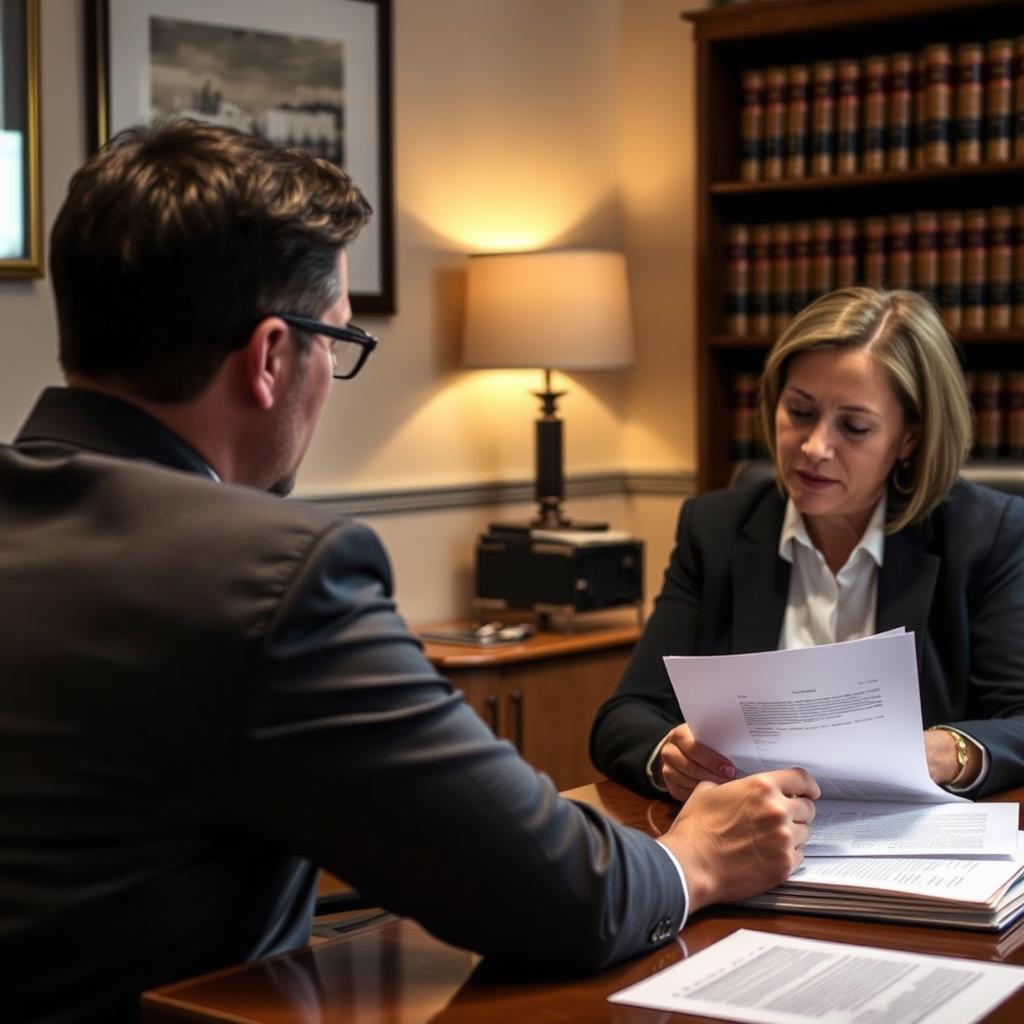
Adultery Divorce Lawyer York County, VA
If you are considering a divorce in York County and adultery is a factor, the legal landscape in Virginia is distinct from many other states. Under Va. Code § 20-91(1), adultery is one of the fault-based grounds for divorce and it does not require a separation period before a court may grant the divorce. The firm represents clients whose divorce cases involve allegations of adultery before the York County Circuit Court, located at 300 Ballard Street in Yorktown, as well as before the York County Juvenile and Domestic Relations District Court when custody, visitation, or support issues accompany the divorce. Mr. Sris and his Of Counsel team at Law Offices Of SRIS, P.C. bring extensive combined legal experience to each matter. Results may vary. and prior outcomes do not guarantee a similar result. For a consultation, reach the firm at (888) 437-7747.
What Adultery Divorce Means in York County
Adultery is one of the few fault grounds available under Virginia law for an absolute divorce from the bond of matrimony. Unlike a no-fault divorce—which requires the parties to live separate and apart for either six months (if no minor children and a written separation agreement is in place) or one year—a divorce granted on the ground of adultery allows the court to enter a final decree without a waiting period. The statutory authority is Va. Code § 20-91(1). In York County, these cases are heard exclusively in the York County Circuit Court, which has jurisdiction over the divorce, property division, and spousal support issues. When a divorce involves children, related custody, visitation, and child support matters may be heard in the York County Juvenile and Domestic Relations District Court.
Filing a divorce complaint in York County requires that at least one party has been a bona fide resident and domiciliary of Virginia for at least six months before the case begins. When adultery is cited as a ground, the petitioning spouse must present evidence to prove the allegation. Virginia courts apply an equitable distribution standard to the division of marital property under Va. Code § 20-107.3, and a finding of adultery can influence how the marital estate is divided and may also affect spousal support. The firm handles all stages of adultery-based divorce cases, from initial fact investigation and negotiation of a property settlement agreement through litigation when a resolution cannot be reached outside the courtroom. The team’s familiarity with the procedures and expectations of the York County Circuit Court allows it to guide clients through the process with a focus on protecting each client’s legal rights and financial interests.
How Mr. Sris and His Of Counsel Handle Adultery Divorce Cases
Every adultery divorce matter begins with a thorough review of the facts. The firm works with clients to understand the timeline of the marriage, the evidence supporting or responding to the adultery allegation, and the financial circumstances that will shape the property-division and support discussions. Because proving adultery in a Virginia divorce requires clear and convincing evidence—a higher standard than the preponderance standard that applies to most civil issues—the investigation and evidence-gathering phase is central to the case strategy.
Once the factual foundation is in place, Mr. Sris and his Of Counsel determine whether a negotiated resolution is possible. In many cases, a property settlement agreement can resolve all remaining issues without a trial, even when adultery is alleged, because the parties are able to reach an understanding that addresses equitable distribution, spousal support, and any ancillary concerns. When an agreement cannot be reached, the team prepares the case for trial before the York County Circuit Court. Throughout the litigation, the firm emphasizes clear communication and a disciplined focus on what the court will consider under the relevant statutory factors. The lawyers present evidence, examine witnesses, and make arguments with an eye toward how each element of the case affects the client’s overall objectives.
About Mr. Sris and His Of Counsel Team
Mr. Sris, Owner and Founder of Law Offices Of SRIS, P.C., is a former prosecutor who has practiced since 1997 and is admitted to practice in Virginia, Maryland, the District of Columbia, New Jersey, and New York. His background in criminal trial work contributes to his approach in divorce matters, particularly in cases where fault grounds such as adultery must be proved to a court. Mr. Sris testified before the Virginia House Courts of Justice Committee in support of 2019 HB 635 (chief patron Del. David Bulova).
Mr. Sris and his Of Counsel bring extensive combined legal experience. Results may vary. and prior outcomes do not guarantee a similar result in any particular matter. The Of Counsel team includes attorneys with former prosecution and law enforcement experience, which deepens the firm’s ability to evaluate evidence, cross-examine witnesses, and present a compelling case. The firm serves individuals throughout York County, including Yorktown, Grafton, Tabb, and Seaford, from its Richmond location by appointment. All consultations are by appointment; reach the firm at (888) 437-7747 to schedule.
Frequently Asked Questions
What must be proven to obtain an adultery divorce in Virginia?
In Virginia, a spouse seeking a divorce on the ground of adultery must prove the adultery by clear and convincing evidence. This is a higher burden of proof than in most civil matters. Evidence may include testimony, records, or other documentation that shows the adulterous conduct has occurred. Because direct evidence is not always available, circumstantial evidence—such as opportunity and disposition—may be used, but the proof must be strong enough to produce a firm belief in the truth of the allegation. The case is presented to the York County Circuit Court, which has exclusive jurisdiction over the divorce itself.
Does adultery affect property division in a York County divorce?
Yes, a finding of adultery can affect the division of marital property and the award of spousal support. Virginia is an equitable distribution state under Va. Code § 20-107.3, and the court considers the circumstances and causes of the dissolution of the marriage when deciding how to divide assets. Adultery can also be a factor in spousal support decisions under Va. Code § 20-107.1. A spouse who commits adultery may be barred from receiving spousal support, while the adultery may also weigh against the offending spouse in the property division.
Can a spouse remarry immediately after an adultery divorce is granted?
Virginia law generally prohibits a divorced person from remarrying until the judge’s final decree is entered and the applicable appeal period has expired or one year has passed from the entry of the decree, whichever occurs first. Remarriage before the divorce is final could cause serious legal complications, including contempt of court and questions about the validity of the new marriage. It is essential to consult with an attorney about the timing of any plans to remarry after a divorce is finalized.
Do I need a lawyer for an adultery divorce in York County?
Hiring an experienced attorney is not required by statute, but the legal and factual complexity of an adultery divorce makes legal representation strongly advisable. Proving adultery, negotiating property division, and addressing custody and support issues all involve procedural rules and evidentiary standards that are challenging to manage without a lawyer. Mistakes in the complaint, service of process, or the presentation of evidence can delay the case or lead to an unfavorable outcome. For guidance on how your specific situation may be handled, contact Law Offices Of SRIS, P.C. at (888) 437-7747.
How is child custody handled when adultery is alleged in a York County divorce?
Child custody is determined based on the best interests of the child under Va. Code § 20-124.3, and adultery, by itself, does not automatically determine custody. The court considers ten statutory factors, including each parent’s relationship with the child, the child’s needs, and any history of abuse or neglect. The adultery may become relevant only if it has a direct impact on the child’s welfare. The York County Juvenile and Domestic Relations District Court handles standalone custody and visitation matters, but when custody is part of a divorce, the Circuit Court may also address it.
For additional reading on family law topics in nearby communities, see: Family Law Lawyer in James City County, VA, Family Law Lawyer in Williamsburg, VA, and Family Law Lawyer in Fairfax County, VA.
Primary Virginia legal resources: Virginia Code Title 20 – Domestic Relations | York County Circuit Court
Attorney advertising. Prior results do not guarantee a similar outcome. Results may vary.
Case results depend on a variety of factors unique to each case.