
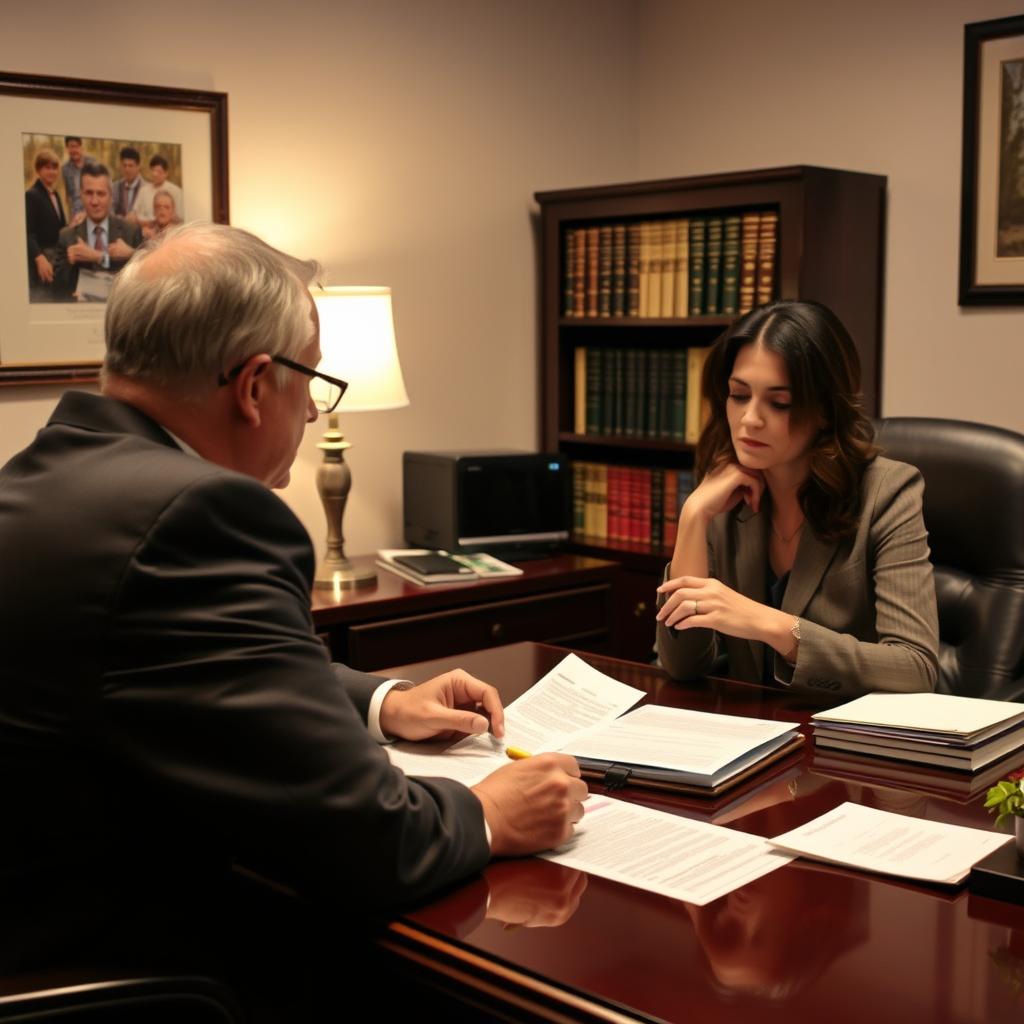
Real Estate Division Lawyer York County — How Is Property Split in a Divorce?
Dividing real estate in a York County divorce is governed by Virginia’s equitable distribution law, Va. Code § 20-107.3. This statute, personally amended by Mr. Sris, requires a fair—not necessarily equal—division of marital property. As a Real Estate Division Lawyer York County, Law Offices Of SRIS, P.C.
Virginia Law on Dividing Property in Divorce
Virginia is an equitable distribution state, not a community property state. This means the court divides marital property fairly based on the specific circumstances of your case, guided by the factors in Va. Code § 20-107.3. The statute defines marital property as all property titled in either spouse’s name, or both, acquired from the date of marriage until the date of separation, with certain exceptions for separate property like inheritances or gifts to one spouse.
Last verified: April 2026 | York County Circuit Court | Virginia General Assembly
External Legal Resources
- Va. Code § 20-107.3 (Official Virginia Law on Equitable Distribution)
- York County Circuit Court Official Website
Handling Real Estate Division in York County
Real estate is often the most significant and complex asset to divide. The process in York County involves identifying all property interests, classifying them as marital or separate, determining value, and then formulating a division strategy. Common solutions include one spouse buying out the other’s interest, selling the property and splitting the proceeds, or, in rare cases, continuing co-ownership.
- Inventory & Classification: List all real estate (primary residence, vacation homes, rental properties, land). Gather deeds, mortgage statements, and records of all contributions (down payments, mortgage payments, improvements) to trace separate vs. marital contributions.
- Valuation: Obtain professional appraisals for all significant properties. The date of valuation is critical—typically the date of separation or the date of the evidentiary hearing.
- Equity Calculation: Determine the net equity in each property (Fair Market Value minus mortgages, liens, and costs of sale).
- Strategy Development: With your attorney, evaluate options: buyout, sale, or offset with other assets. Consider tax implications, refinancing ability, and children’s housing stability.
- Negotiation or Litigation: Attempt to reach a property settlement agreement. If agreement is impossible, prepare for a contested hearing where the judge will apply the statutory factors to decide division.
- Implementation: Execute deeds, refinance mortgages, and ensure court orders are recorded to clear titles and fulfill division terms.
Potential Outcomes and Considerations
In York County, dividing real estate in a divorce involves offsetting equity, buyouts, or forced sales, with outcomes heavily influenced by contributions, needs, and other marital assets.
The court’s division is not a simple mathematical formula. Under Va. Code § 20-107.3, the judge considers 11 factors, including each spouse’s contributions to the property’s acquisition, care, and maintenance; the duration of the marriage; and the economic circumstances of each party at the time of division. A spouse who used separate funds for a down payment may be entitled to a credit for that contribution before the remaining equity is divided.
Results may vary. Prior results do not guarantee a similar outcome.
Why Choose Our Firm for Your Property Division
Founded in 1997 by former prosecutor Mr. Sris, Law Offices Of SRIS, P.C. brings over 120 years of combined legal experience to complex family law matters. Our deep understanding of Virginia’s equitable distribution statute is unparalleled—Mr. Sris personally played a role in amending Va. Code § 20-107.3. This insider knowledge of the law’s intent and application provides a distinct advantage in negotiating and litigating property divisions. We approach each case with the precision it demands, whether it involves a single-family home or a multi-property portfolio.
Samantha Rae Powers, Associate Attorney at Law Offices Of SRIS, P.C. — Licensed in VA, FL. Experienced family law and civil litigator. View Samantha Rae Powers’s Profile
Case Results and Client Advocacy
Our firm has a documented record of achieving favorable outcomes for clients. In York County and across Virginia, we have successfully negotiated property settlements that protect our clients’ financial futures and litigated complex divisions involving business assets, retirement accounts, and real estate. Mr. Sris, the firm’s founder, provides oversight on intricate property division matters, ensuring every strategic angle is explored.
Results may vary. Prior results do not guarantee a similar outcome.
Contact Our York County Real Estate Division Lawyers
Law Offices Of SRIS, P.C.
7400 Beaufont Springs Dr Suite 300 Room 359, Richmond, VA 23225, United States
Toll-Free: (888) 437-7747 | Local: (804)201-9009
Phones 24/7/365. In-person meetings by appointment only at our Richmond location, which serves York County.
Our Richmond location represents clients in York County courts. We serve the communities of Yorktown, Grafton, Tabb, and Seaford. For a home division in divorce lawyer York County who understands local procedures, call us 24/7.
Real Estate Division in Divorce FAQs
Who gets the house in a Virginia divorce?
It depends. The court decides based on Va. Code § 20-107.3 factors. Common outcomes include a buyout by one spouse, a sale with split proceeds, or awarding the house to the primary caregiver of minor children for a set time. The goal is a fair division, not automatic equal split.
Is my spouse entitled to half my house if it’s in my name?
Yes, if it was acquired during the marriage. Title alone does not determine ownership in divorce. Virginia law presumes property acquired after the wedding date is marital, regardless of whose name is on the deed. A property split lawyer York County can analyze contributions to argue for a favorable division.
How is home equity divided in a divorce?
First, get an appraisal to find fair market value. Subtract the mortgage balance and selling costs to find net equity. The marital portion (equity accrued during marriage) is then divided equitably. Separate property contributions (e.g., pre-marriage down payment) may be reimbursed first.
Can I be forced to sell my house in a divorce?
Yes. If spouses cannot agree on ownership and a buyout isn’t feasible, the court can order a sale. This is common when neither can afford the mortgage alone or when other assets are insufficient to offset the equity award to the other spouse.
What happens to a mortgage in a divorce?
The mortgage remains with the property. If one spouse keeps the house, they typically must refinance the mortgage into their name alone to remove the other’s liability. If not refinanced, both remain legally responsible for the debt, even if the divorce decree assigns payment to one.
How is a rental property divided in divorce?
Rental properties are marital assets subject to division. The process involves valuing the property, calculating equity, and assessing income stream. Division may involve a buyout, sale, or awarding the property to one spouse with an offset from other assets.
Related Legal Services in York County
Our firm provides full-scope family law representation. If you are facing a divorce involving property division, you may also need guidance on Virginia divorce law, family law in Henrico County, or criminal defense in York County.
Page Last verified: April 2026. Laws change. Contact Law Offices Of SRIS, P.C. at (888) 437-7747 for current legal guidance regarding real estate division.